
Jordan is a country very rich in both history and natural beauty. High mountains at about 1000 feet above sea level dropping gracefully to the fertile Jordan valley at sea level which inclines steeply to the Dead Sea are a wondrous sight. It is interesting to note that Jordan’s history precedes Christ era and has many points of interest related to Moses or Musa, as he is called in Jordan. The Romans did not leave this part of the world alone. A lot of Roman ruins shows how popular this country was during the Roman times. Still being ruled by a King and a Prime Minister appointed by the King, this is a peaceful country in the Middle East.
Amman
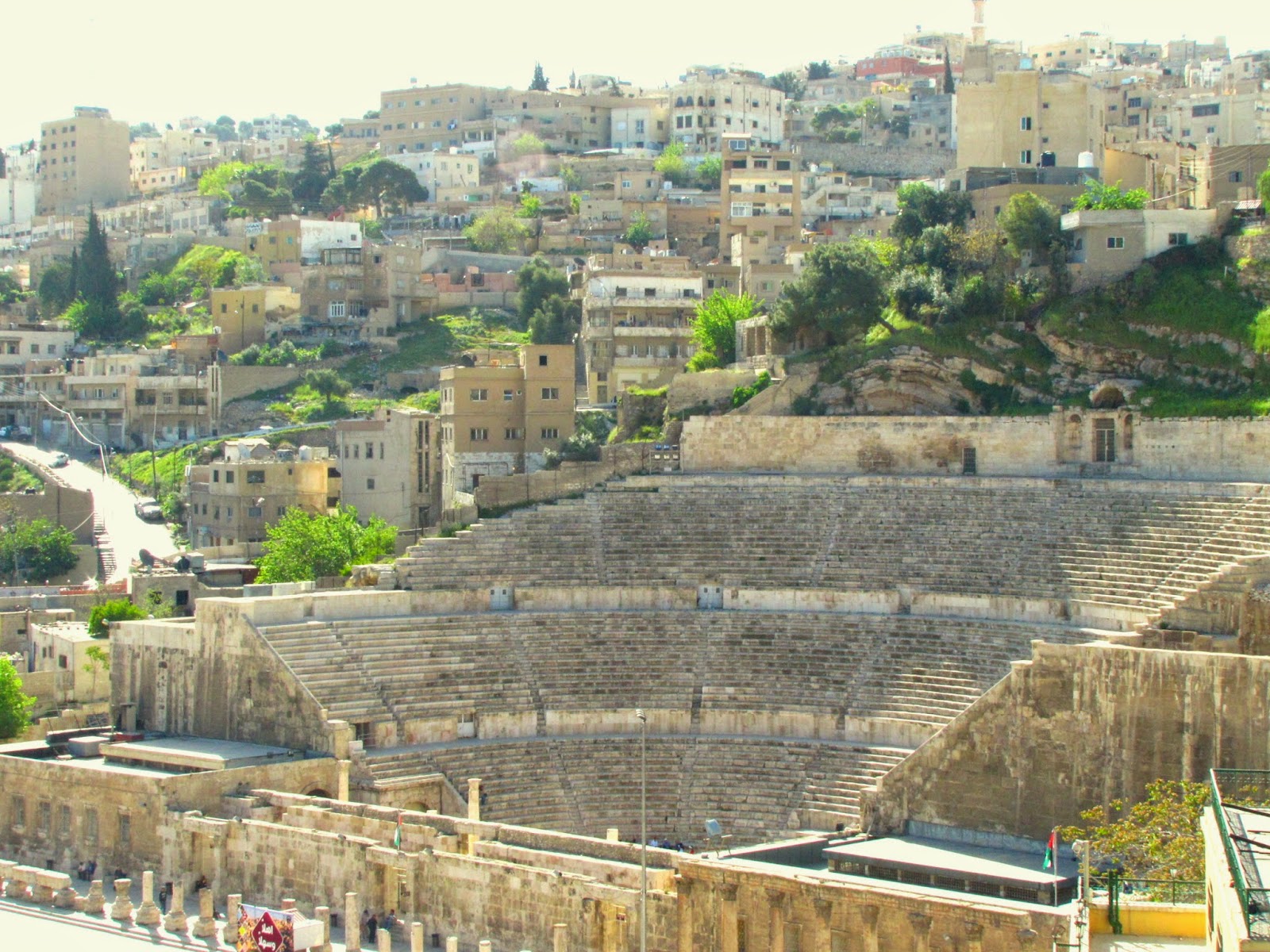
Capital and probably the only city in Jordan is located 900 feet above sea level amidst 7 hills. It is a bustling city catering to both locals and tourists alike. It is quite densely populated and the traffic is pretty unruly. The traffic system reminded me of Chennai’s traffic. There are people walking across busy roads expecting the oncoming traffic to slow down or stop. When there is a red light, you have to dart across to the other side quickly before the other side’s traffic starts moving. There are lots of people on the side walks. “Are you from India?” queries followed by a “Namaste”, inquisitive about your religion and pestering you to buy from their wares were interesting interactions. People were generally very friendly and loved to chat with you. If you are not hard-pressed for time, you can spend a couple of days in Amman enjoying the warmth of the people and super-cheap but tasty food from restaurants like Hashem. This is good as a base for exploring some Roman and early Islamic ruins to the north, east and west of Amman. The Dead Sea is also not far away and many prefer to travel to Dead Sea as a day trip, buy a day pass from one of the resorts for about 40JD per person that includes access to the beach, pools, shower and changing rooms and may also include a buffet lunch. Works better if you are traveling alone. To the north is Jerash, a popular Roman ruin; to the east are some desert castles (Qasr Umm) that have some early Islamic art of people which is a rarity in Islam since none of God’s creation can be recreated by humans in art form.

To the West is the Dead Sea, Madaba – a church that has a map of the area in mosaics, Mount Nebo, a mount from which Prophet Moses is supposed to have seen the Promised Land before he died and Bethany – the baptism site of Jesus which is right beside the Palestinian border. We chose the west tour for our one day in Amman.
One attraction that I was very impressed with in Amman was it’s Children’s Museum. For 3JD per person, it is an interesting museum for children aged from about 3 to 15. Other than the usual farm animals, human body and supermarket exploring experiences, it had a real time flight simulator that appealed to even me. There was a media center that let children create their own news presentation, a rock climbing wall and numerous other exhibits that kept my children thoroughly entertained for over 2 hours. There were more but we could not explore due to time limitations.
Petra
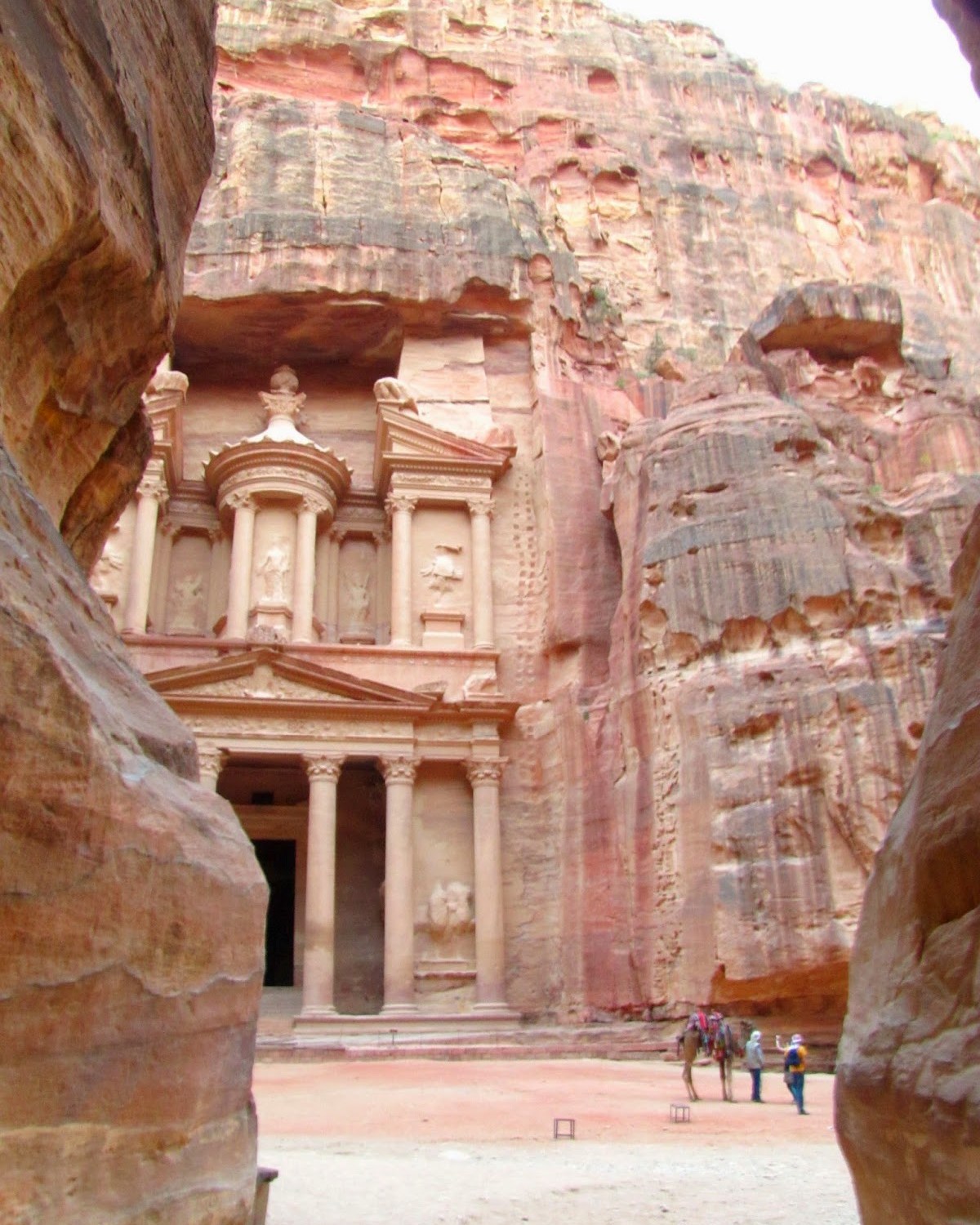
 It is a totally different and enriching experience. About 3 hours away from Amman, amidst sandstone mountains lies Petra, a rocky city. The rocks look like hardened lava from far, but once near, they are beautifully colored and textured. Petra was built by the Nabateans between 3rd century BC and 1st Century AD and is a city of tombs. The most photographed structure, the treasury (Al-Khazneh) was the tomb of the king and was supposed to have contained treasure which I believe was never found. The Nabateans slowly lost their identity with the invasion of Romans in the 1st century AD and even their building style changed due to the Roman impact (the amphitheater inside Petra). Petra was lost to the modern world until the 19th century.
The visitor center sells tickets for 50JD for a single day entry and 55JD for 2 day entry. We chose the 2 day entry and made a quick visit to the treasury the first evening a little before sunset. The visitor center is open 6 am to 6 pm. The walk from the visitor center to the entrance to the Siq (a long narrow canyon) is about 1.5 kms. The terrain isn’t too rough but is inclined. There are horses that are supposed to be included in the price of your ticket to take you to the entrance of the Siq but the horsemen expect a 3-5JD tip per horse for covering this 1.5 kms. There are also carriages that take you to the Treasury (Al Khazneh) for 20JDs one way and you can bargain with them for return and arrange a pick up time.

The Siq is a 1.2 km long narrow twisty canyon that was formed when a mountain was split due to the tectonic plate shifts many thousands of years ago. At places the left and right sides of the canyon can be fit together like a jigsaw puzzle. At places it is very narrow that would allow only a horse to pass through and at other palces it broadens to resemble a little courtyard. The rock surfaces on either side range from yellow, brown to pink and have beautiful textures on them. Some rocks resemble animals, alien faces and one, even a human nose. There are some eroded carvings along the walls. There are fig trees growing at some points which is supposed to indicate prosperity. There have been flash floods in this Siq which are now supposed to be under control. The terrain is mostly smooth to walk but deeply inclined at the start and at some parts in the middle. The light fades quickly in the Siq during the evening as the canyon walls are high enough to block out the last rays of sunlight.

At the end of the Siq is the Al-Khazneh, the most photographed structure in Petra. The sight of the structure as you emerge from the long canyon is breath-taking. There are bullet holes on the top which was due to some tribe hoping for the treasure to drop from the top of the structure. The best time to photograph this would be afternoon once the Sun moves to the other side since the harsh sunlight washes away the beauty of the pink sandstone. There are camels and donkeys (proudly announced as taxis by their owners) available for hire to take you through the lost city and as far as the monastery. Prices vary and needs to be haggled and terms discussed without fail before hire. Donkeys can take you up steps and steep trails while camels can only take you along the main trail until the Museum.
There is a huge crowd in front of the Al-Khazneh making it difficult to photograph. We were lucky to see and photograph an almost empty Al Khazneh the previous evening just before sunset. A short 5 minute ride on a camel costs 3JD if you just want to experience it. To the right of the Al-Khazneh the Siq broadens out considerably. This is called the inner siq and the terrain here is quite rugged. The amount of tourists, the Bedouins and the animals make it difficult to navigate here. The terrain isn’t as friendly as the outer siq. Added to this is the constant pestering from the donkey men to hire a donkey for your visit. There seems to be more donkeys than people. Donkeys are owned by the Bedouins who live deep within Petra. Stray and unkempt dogs follow some donkeys and men. You have to watch where you put your feet as there’s waste from 4 different kinds of animals on the ground!
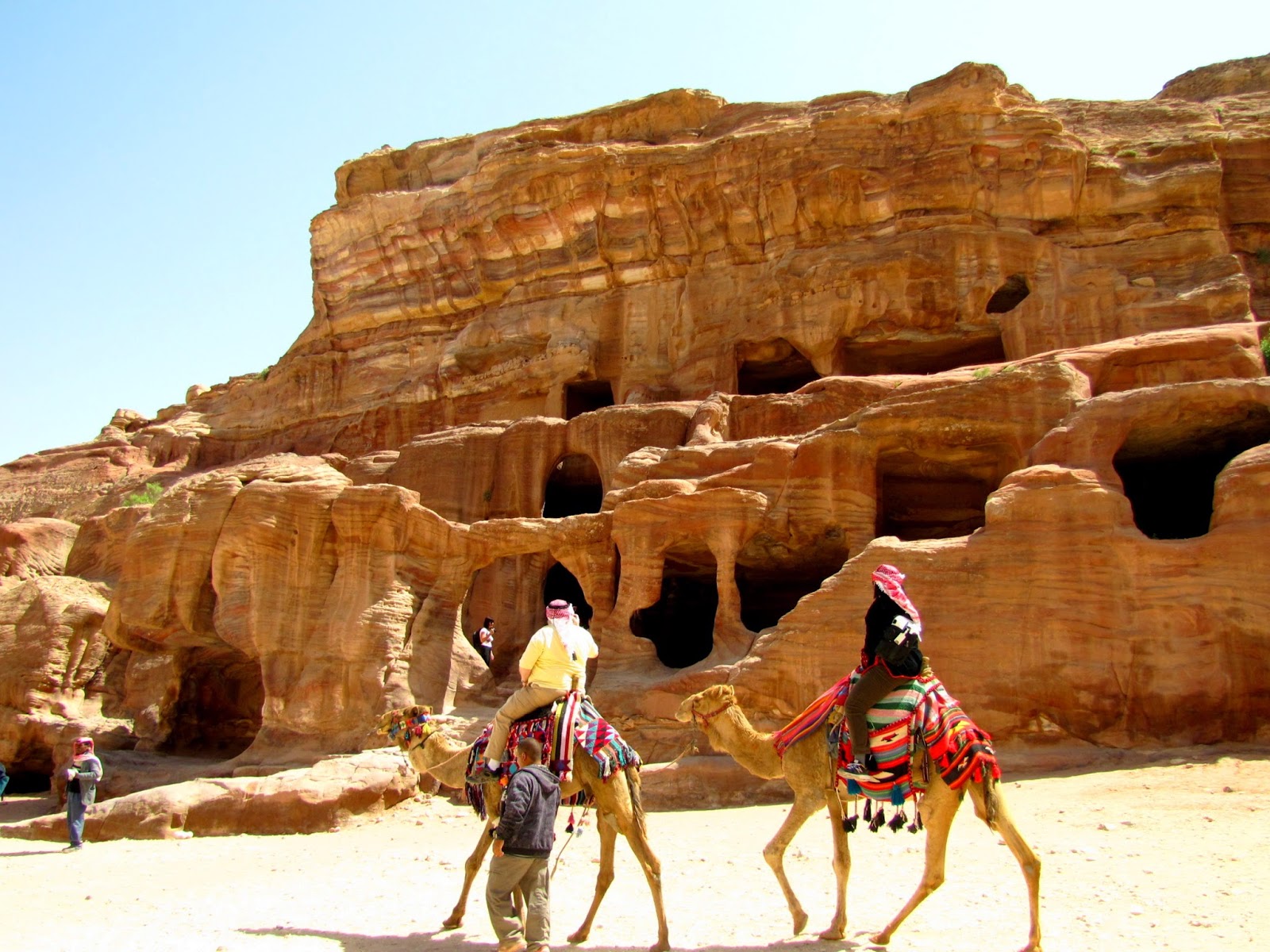
From the Al-Khazneh, there are numerous other tombs, an amphitheater and different trails to take you to the top of the cliffs for dramatic views over Petra. There are also cafes, restrooms and souvenir shops as well as ad-hoc stalls set up to sell jewelry and rocks by the Bedouin women. We went as far as the amphitheater only due to heat and time limitations.
There are group tours arriving only by noon hence making it more crowded and noisy. At the end we preferred the evening visit to the morning visit due to the crowd, heat and light factors.
King’s Way
 An ancient route that stretched from North Jordan up until Aqaba was a major trade route between the East and West. This route is dotted with numerous castles, valleys and above all enchanting views. Some of the stops we made along this route between Amman and Petra were the Al-Karak castle, a trader castle, Wadi Mujib, a valley that now has a dam built across the Jordan river, Dana Nature Reserve and Ash-Shubak crusader castle. The entire route is mountainous and with varying elevation levels. The Desert Highway is used to get to Petra faster.
Dead Sea
 Currently estimated to be around 400 metres below sea level and shrinking at an alarming rate of 1 metre every year, the lowest point on earth is filled with rich minerals and salts. The northern most resort town of Sewamiyah has all the hotels and resorts located. They are tightly guarded due to the proximity of the Palestinian border. The Dead Sea has a salinity of 30% that does not permit any organisms to survive in these waters. Hence the name. This level of salinity also helps one float effortlessly. The water is rich in a number of minerals in addition to salt and is deemed to have therapeutic properties. However the water is also harsh on eyes, mouth and cut or bruised skin. A luxurious addition to swimming in the Dead Sea is the availability of free mud pack. The mud dug from shores is again rich in minerals and is usually available free of cost to the resort’s guests. Few minutes of floating in the Dead Sea and few minutes of soaking up the mud is a ritual that most visitors to the resorts go through. The sand on the beach is soft and smooth. However the sea is pebbly and not kind on the feet. However it did not affect us much as we did not wade in too deep.
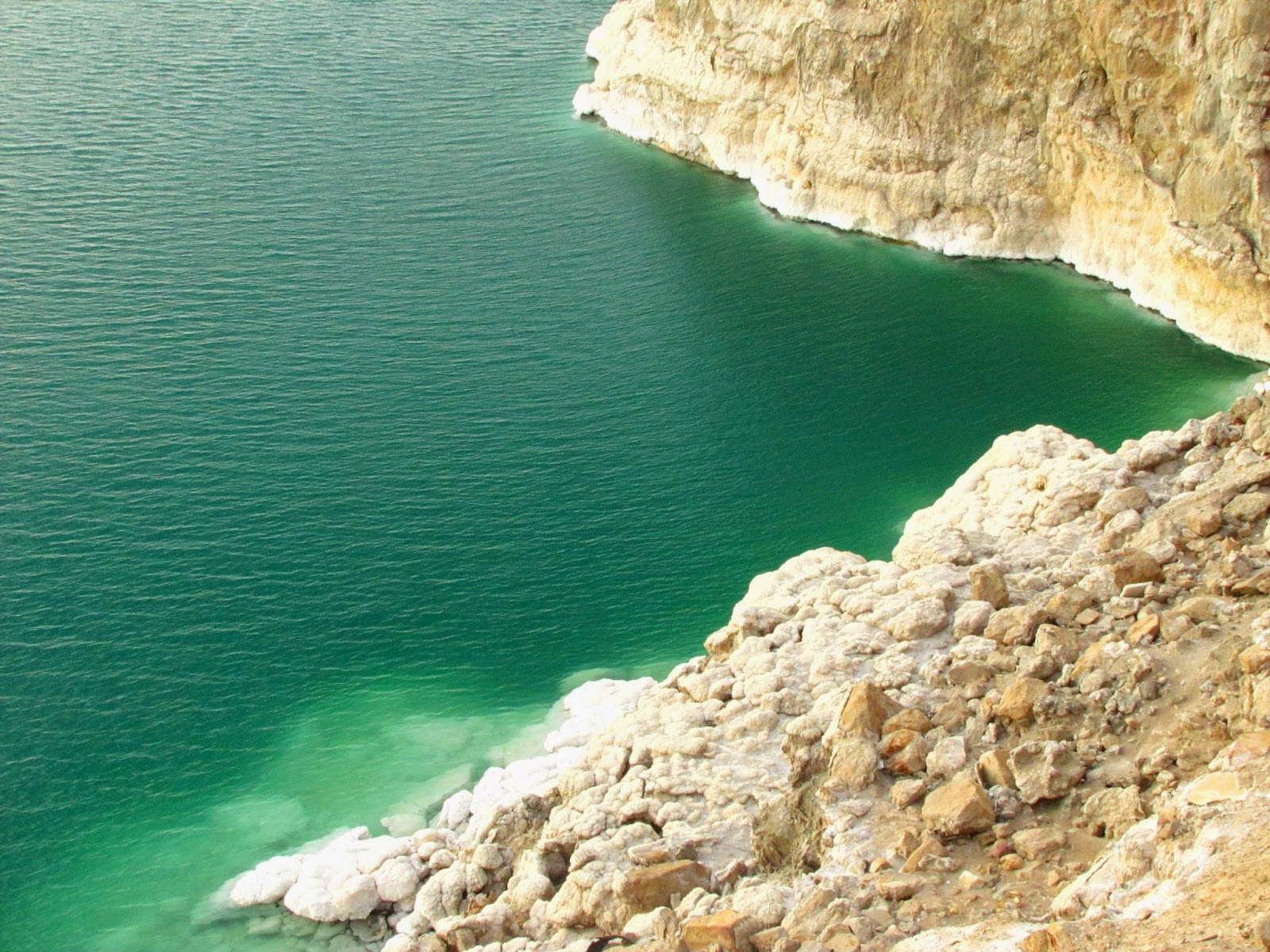 Dead Sea does not have any inlets other than few water channels in Jordan. However with the building of a dam across the Jordan River at Wadi Mujib and very little rains, there is no source of water to the Dead Sea and it is evaporating fast. Efforts to cut a canal from Red Sea to the Dead Sea close to the Israel border has failed miserably due to the political and religious tensions in the area. Across the Dead Sea is Israel and the holy city of Jerusalem that my cell phone sometimes picked up signal from the Jerusalem tower.
Other top attractions in Jordan that we did not visit are Aqaba, a resort on the Red Sea and Wadi Rum, a very popular natural desert reserve near Aqaba that has featured in a few movies.
Visa
Almost everyone gets visa on arrival for 40JOD. However Indian passport holders have additional checks performed. They need to carry at least USD1000 (some say USD 3000) in cash and hotel reservations. It is easier to get a visa for up to 7 days than 7 days and over. It took us two hours to get the Visa. An alternative would be to apply for visa at the local embassy. However you need to make a personal appearance (available only in New Delhi) and the cost is higher. With a visa in the passport, it is a breeze on arrival.
Hotels
In Amman we chose Amman Pasha Hotel, a hotel right in the center of the city. It is a budget accommodation, however, right beside the Roman amphitheater. They had their own travel desk and a cafe/restaurant. We arranged transport for our entire trip through them and we found them mostly reasonable.
In Petra we stayed at the 3-star Petra palace hotel. One of the furthest away from the entrance to Petra, at about 200 meters, it had rooms that could accommodate 4 people which was not so common otherwise. The closest would be Petra Guest House.
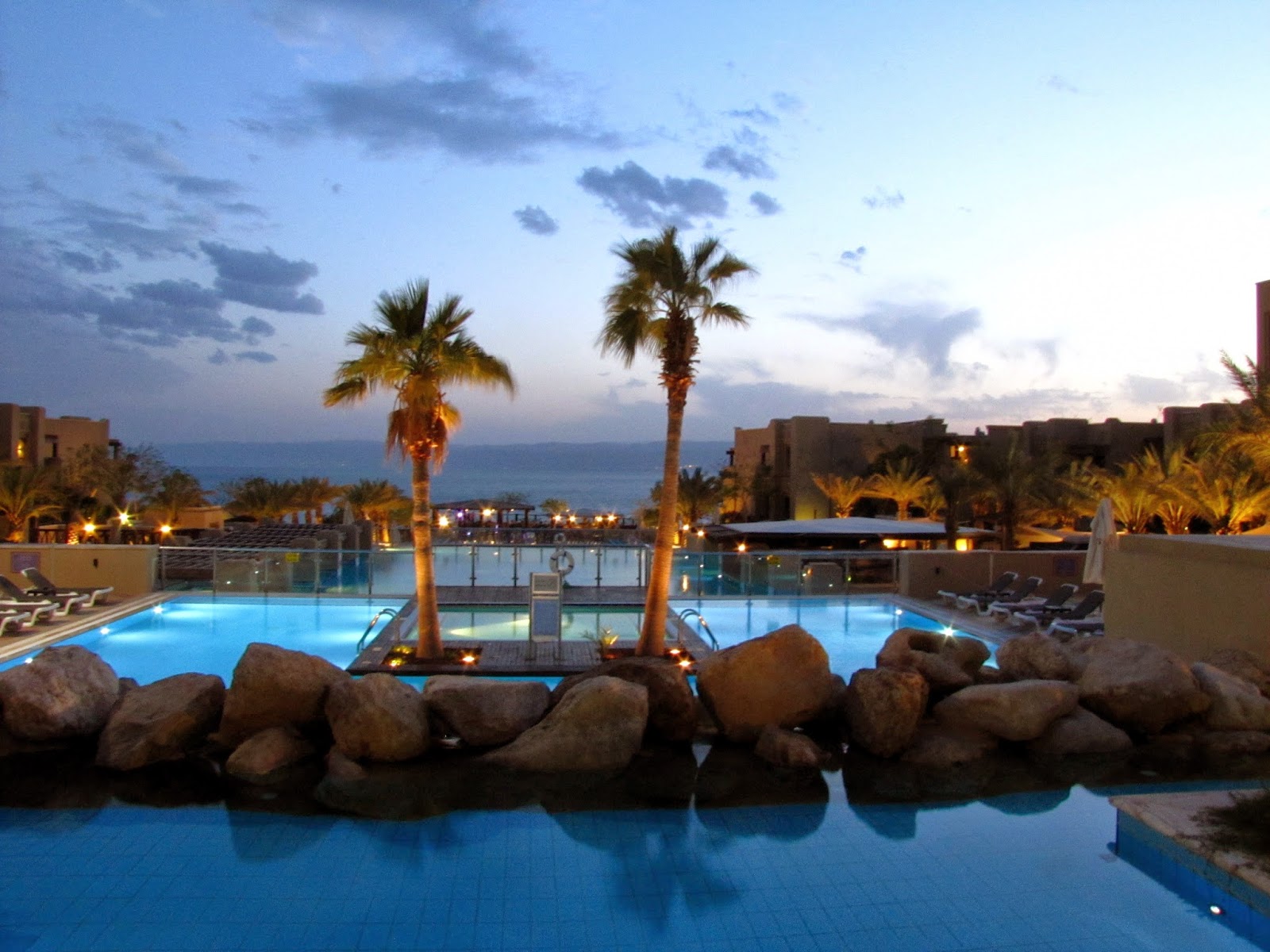
In the Dead Sea region, we stayed at Holiday Inn Resort. The cheapest of the resorts and the northern most. However no complaints on the facilities. Very well maintained and truly a resort in all sense.
Language
Arabic is the language spoken widely. However a lot of them understand and speak a little English. Especially those that deal with tourists can understand basic English and try to converse with you in broken English. Even otherwise they try to get help from others who can speak better.
Currency
Jordanian Dinar, currently almost at par with the GBP. It is made up of 1000 fils. It is very easy to spot a tourist and tourist are most easily fleeced since they have no idea of the local cost of living or prices. An example would be tourists are sold a bottle of drinking water for 1JD while locals get 4 bottles for the same price. I willingly parted with 1.15JD for 4 bananas while the previous night I had paid 1/2 JD (500 fils) for 8!
Food

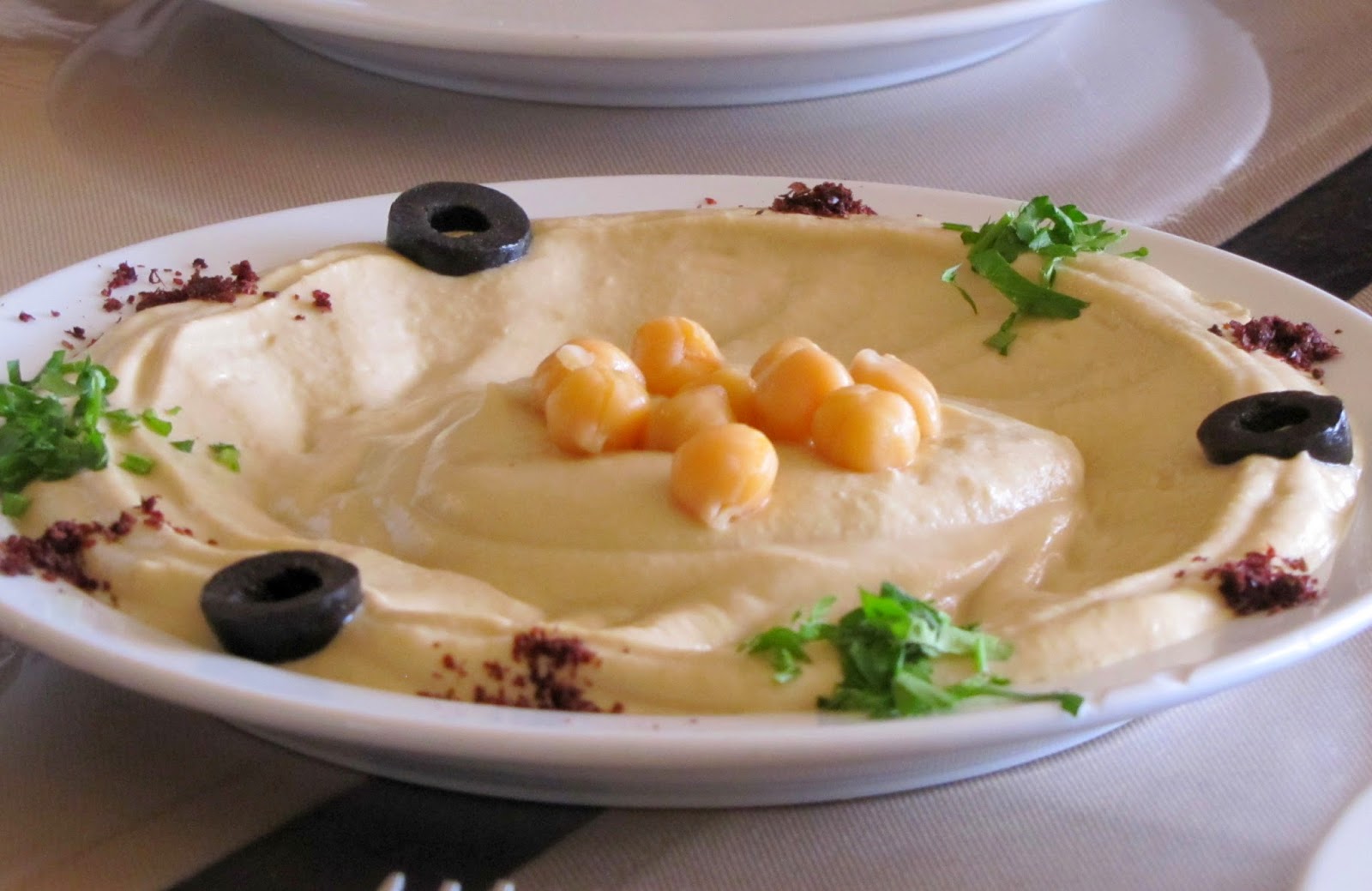

Hummus, Lebaneh (thick yogurt), Baba Ganooge as dips for flat bread, Falafels and Tabouleh are vegetarian staples. However, you get bored with them after a while as this is all you get if you are a vegetarian. Fresh lemon and mint juice is so common in all restaurants and helps keep you in good health during travel. Bottled water for drinking is a must. Tap water is quite safe for other purposes.
Souvenirs

Mosaics are very popular to the west of Amman. There are many stores and factories making and selling mosaic art that can be framed and hung on walls. The price of course depends on the craftsmanship. However it also depends on whether it is a store catering strictly to the tourists or a merchant who sells his work for a small mark up! Cosmetics and toiletries made with minerals from Dead Sea are another popular purchase. However the prices match something off stores in the UK or even a little more expensive than my regular LUSH and Body Shop hangouts.
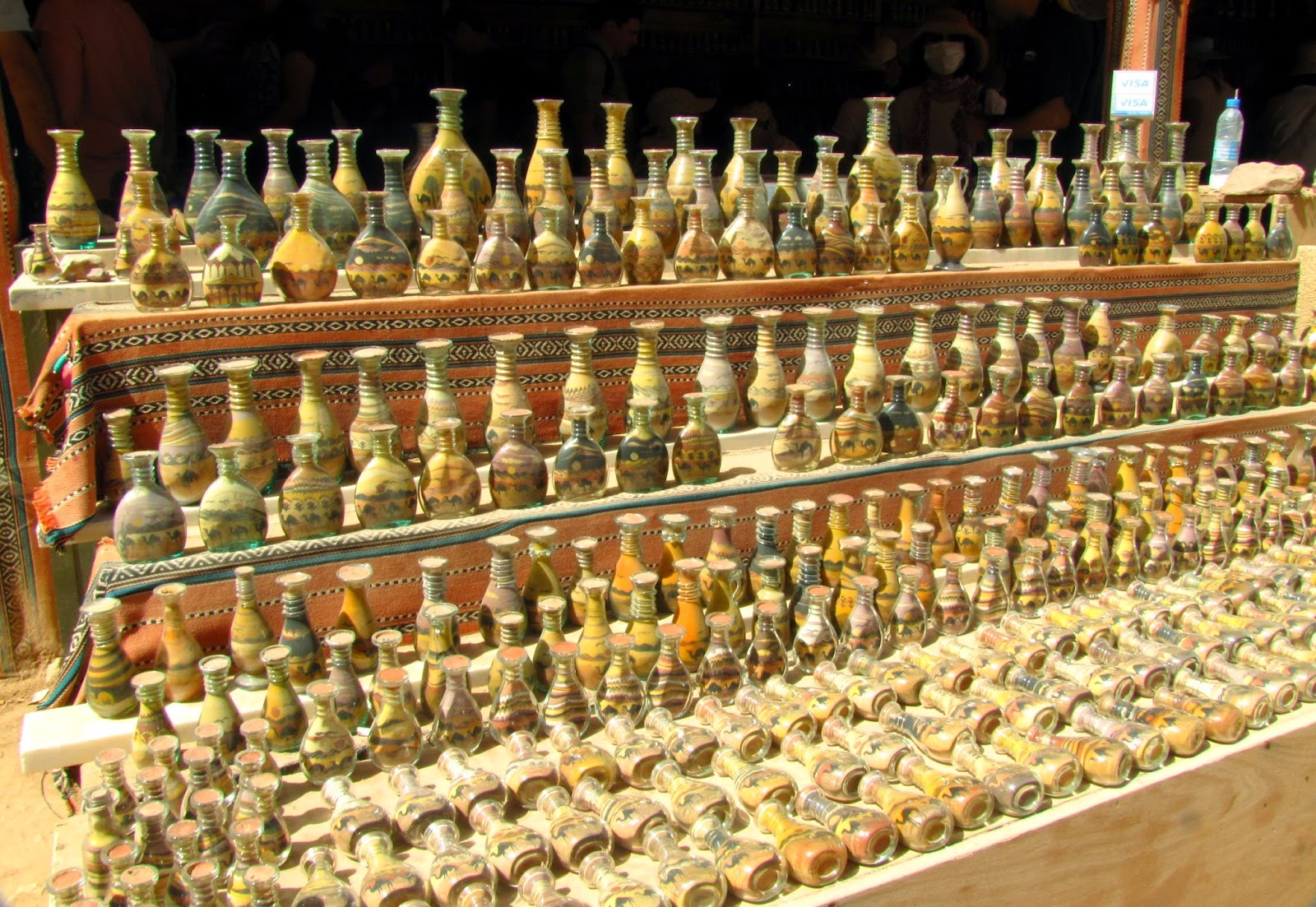
Sand Art bottles are another cheap but Jordan based souvenir. Colorful sand is filled into glass bottles in a pattern or depicting a scene. They can be customized with names or designs you want. They start from 2JD for a small bottle. I also saw a lot of jewelry being sold. Did not bother to explore as I found similar ones for lower prices on ebay!
Certain incidents left a bad taste about Jordan at the end of our visit. There is wide spread fleecing of tourists both at the individual and at the government level. Visa fee of 20JD pp was all of a sudden doubled to 40JD on April 1st that took a big hit on our budget. Entry fee of 20JD to Petra was hiked to 50JD pp with a compulsory tip horse ride included. Many of the souvenir establishments treat JD at par with GBP though it is available for 1.10 outside. Chauffeured taxis arranged through your hotel are a good way to explore the country. However getting a knowledgeable English speaking driver depends largely on your luck. We were lucky only the last two days. The first couple of days we had drivers who watched us being fleeced while the last day our driver got us 3 sandwiches and some falafels for 1.5JD at Hashem – it was our dinner!
A week’s visit would be nice. I am a little bitter at missing Wadi Rum which is supposed to be of great beauty but sadly this would be our last visit to Jordan considering the expensive airfares and the visa issues.
 Fly ✧ Ride ✧ Drive