
Day 2 – Pyramids
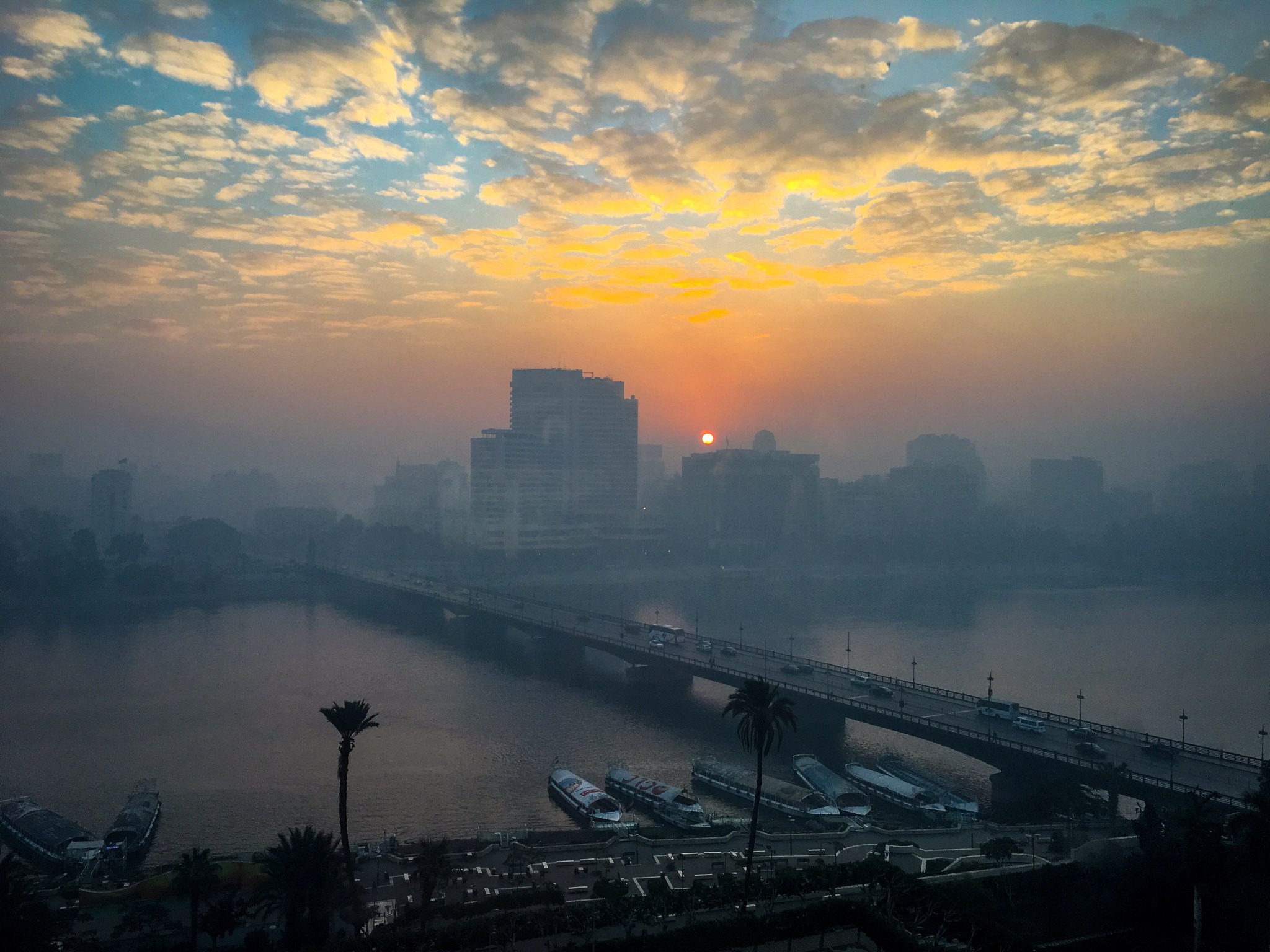
We were up by 6:30 to watch the sun rise over the Nile in the morning haze of Cairo. The Nile looked peaceful and majestic in the morning light. There wasn’t much activity on the roads that early and it was a sight that would remain etched in memory for ever.
Today was the big day! The day we would be seeing a “big” sight – figuratively, metaphorically, literally and every which way!
Jump to
Refreshing ourselves we went down to a hearty spread for breakfast. There was all kinds of food – from Fuul and Falafel to cereals and cold foods. We stuffed ourselves and took our van at about 8:30 and drove down to pick up our guide. After the tussle with the tour operator I was quite skeptical about the quality of the guide we would be getting but was pleasantly surprised. Galim, a former archaeologist was very friendly, spoke very good English and was a wealth of information. He had a never say die spirit and truly endeavoured to make it a memorable day for us.
We passed the new Grand Egyptian museum that was being built. It was as huge as a large mall in the US and I could only imagine how much time it would take to cover all artefacts on display here. I kept looking out for the pyramids and could hardly make them out in the haze that had enveloped the city until we were almost near it. But then Giza wasn’t the first on our itinerary. There was more to be explored, more that were built much before the Pyramids of Giza.
Dahshur
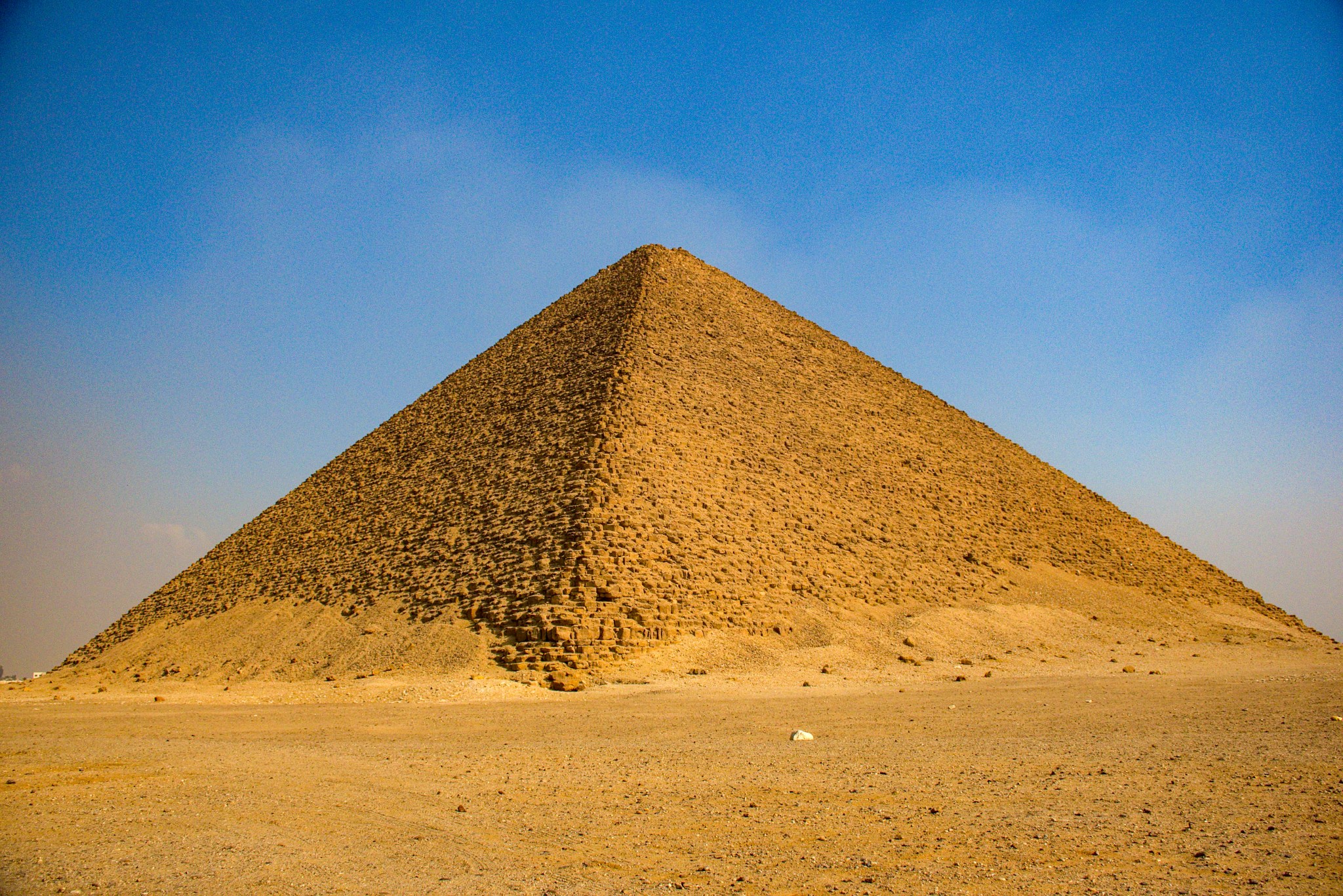
Dahshur was our first stop to see the bent and red pyramids. The Red pyramid appears the first as we drive into the area from the entrance. While nowhere in size compared to the great pyramids, the Red Pyramid, our first Pyramid sighting was breathtaking. Standing tall and proud and in contrast with its desert surroundings, it is truly a stunning moment. We stopped for a picture a few metres away and soon we were on our way to the Bent Pyramid.
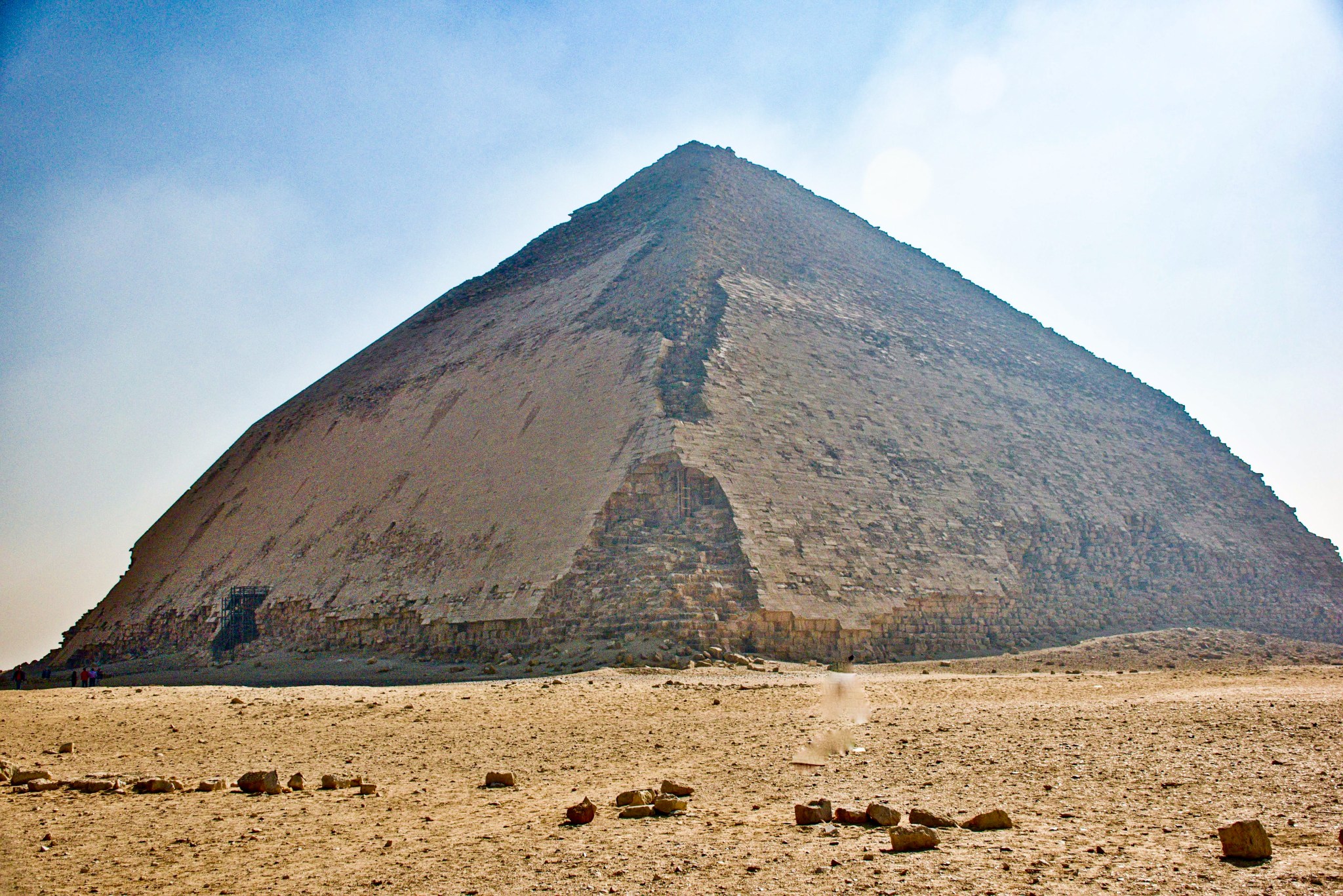
The Bent Pyramid is very unique in its appearance. It was the second pyramid built and what was started at a very ambitious angle had to be tamed halfway through as the structure started crumbling. Hence the pyramid is steeped until about halfway up and then the incline is lower so that the structure could hold its own weight. The pyramid was covered in limestone casing and its distance from major cities ensured that the casing remained intact through the centuries and millennia. It is probably the only ancient pyramid that has its limestone casing intact. Some of the stones were however exposed and we used this opportunity to climb up a few levels.
We had decided against going inside any of the pyramids. All the pyramids in the old kingdom were plundered long ago or perhaps there was nothing in them except bare stone walls and the effort and cost were not encouraging either.
Saqqara
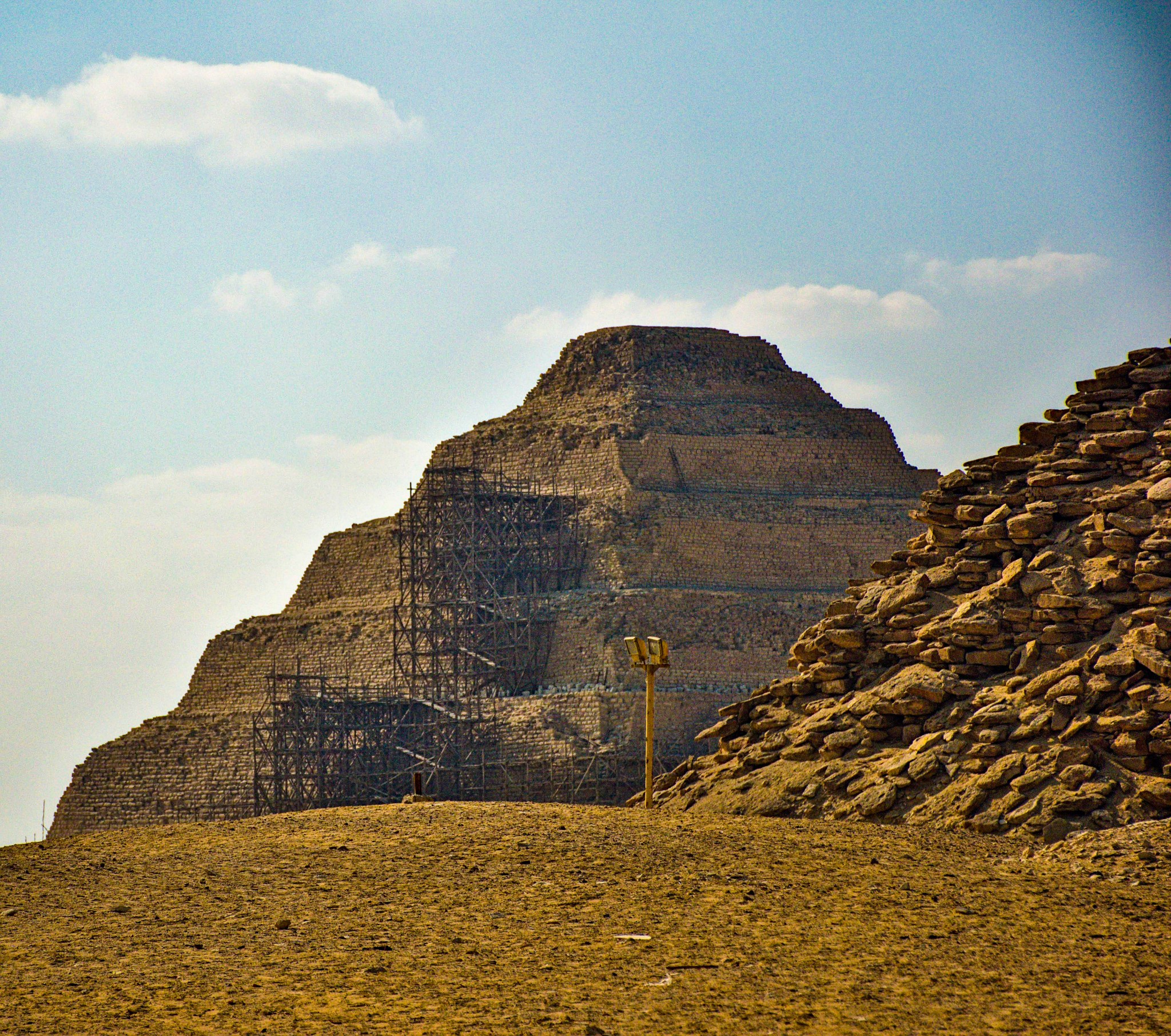
We soon left Dahshur and drove to Saqqara. Saqqara is the one of the earliest sites in the ancient kingdom of Egypt and perhaps the largest necropolis in the world. Excavations are still in progress and there are new tombs, mastabas, pyramids still being discovered. Saqqara is also home to the world’s oldest stone structure – the step pyramid.
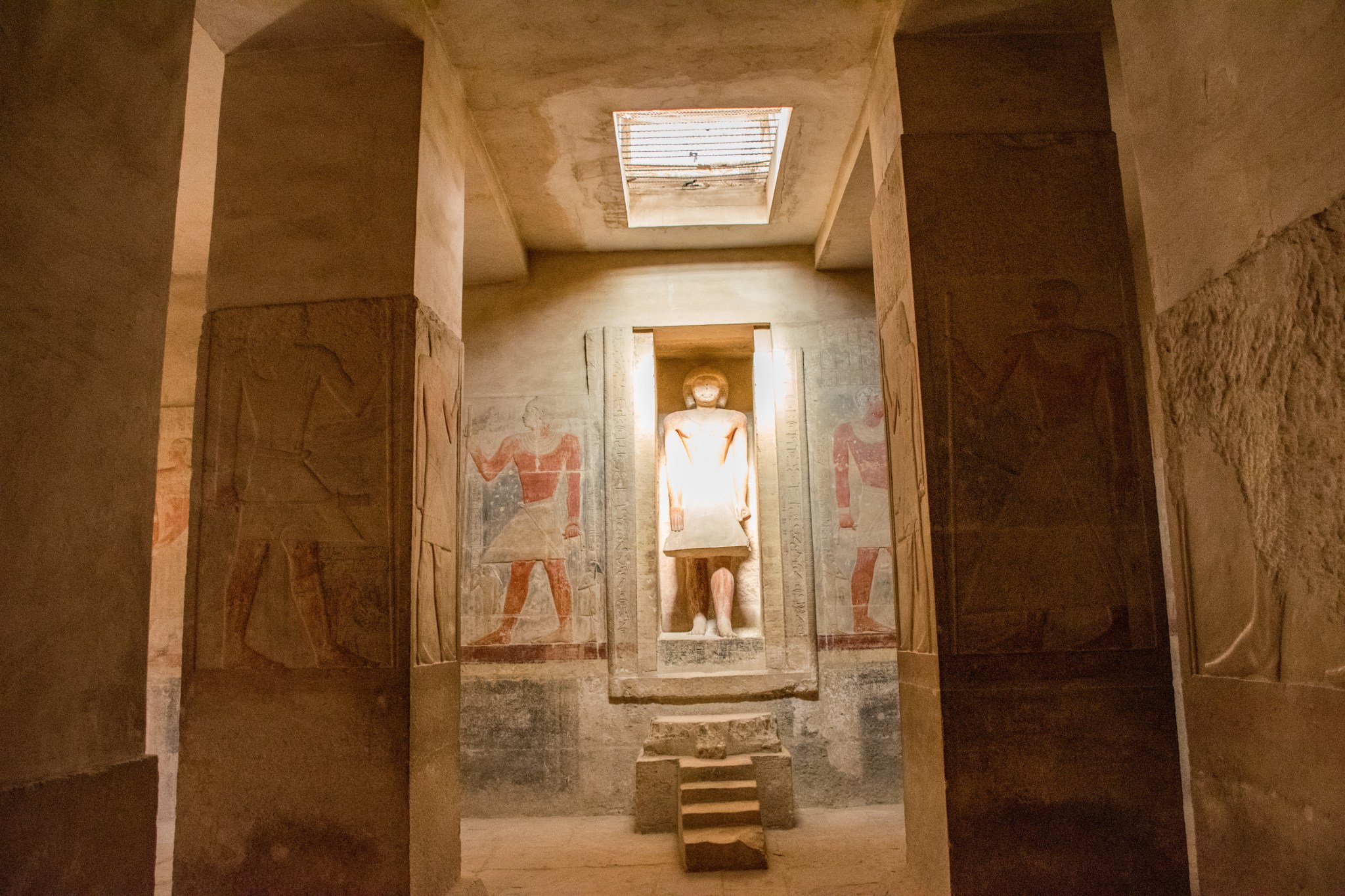
The name Saqqara signifies death – the last breath as explained by our guide. He also recommended that we get tickets to see the inside of the Tomb of Mereruka. It was a great piece of advice as we would soon find out. The tomb of Mereruke was filled with colourful and interesting wall paintings that detailed the life in ancient Egypt. The works were almost intact for nearly 4000 years and helped early archaeologists figure out the lives of ordinary and royal people in ancient Egypt. The tomb was also quite empty and gave us loads of time for the guide to explain in detail and for us to wander around a few times.
We then visited the Teti Pyramid. Breaking our decision to not visit the interior of any pyramid we decided to see how it actually felt. The entrance to the pyramid was very narrow and we had to bend down really low to access the inside. The interior here had at least some bas relief and carvings on the walls and ceilings while the insides of the great pyramids were empty. We had a quick look around and exited the tight space. It is believed that Teti’s sarcophagus – a heavy stone one was lowered from the top rather than being brought in through the narrow entrance. The pyramid was filled with sand and the heavy sarcophagus was placed on top which made sand shift and the sarcophagus reached the bottom.

Next was the step pyramid. The step pyramid was an improvement over the mastabas. The Mastabas were flat, square shaped tombs. Mastabas were then built over each other in progressively smaller sizes until they became a pyramid which was the step pyramid at Saqqara.
The next evolution in pyramid design was the Bent Pyramid at Dahshur. A step pyramid cased in limestone with smooth sides. But they went horribly wrong with the angle of the pyramid and then course corrected it. The pyramid that evolved next was the great pyramid of Giza.
Giza
We arrived at Giza at lunch time and had a buffet lunch at one of the million restaurants that catered to tourists. The haze had cleared out and I was glad that I took the decision to visit Giza in the afternoon rather than in the hazy morning.
The great pyramids of Giza
Unarguably the oldest and the finest attraction in the history of mankind, the site was naturally busy not but crazy!!! Countless tour buses and groups, individual visitors from all countries across the world there was a mad scramble at the entrance gates to enter the plateau. Of course the pyramids are visible across almost all of Giza and from Cairo too but who wouldn’t want to get close to it?
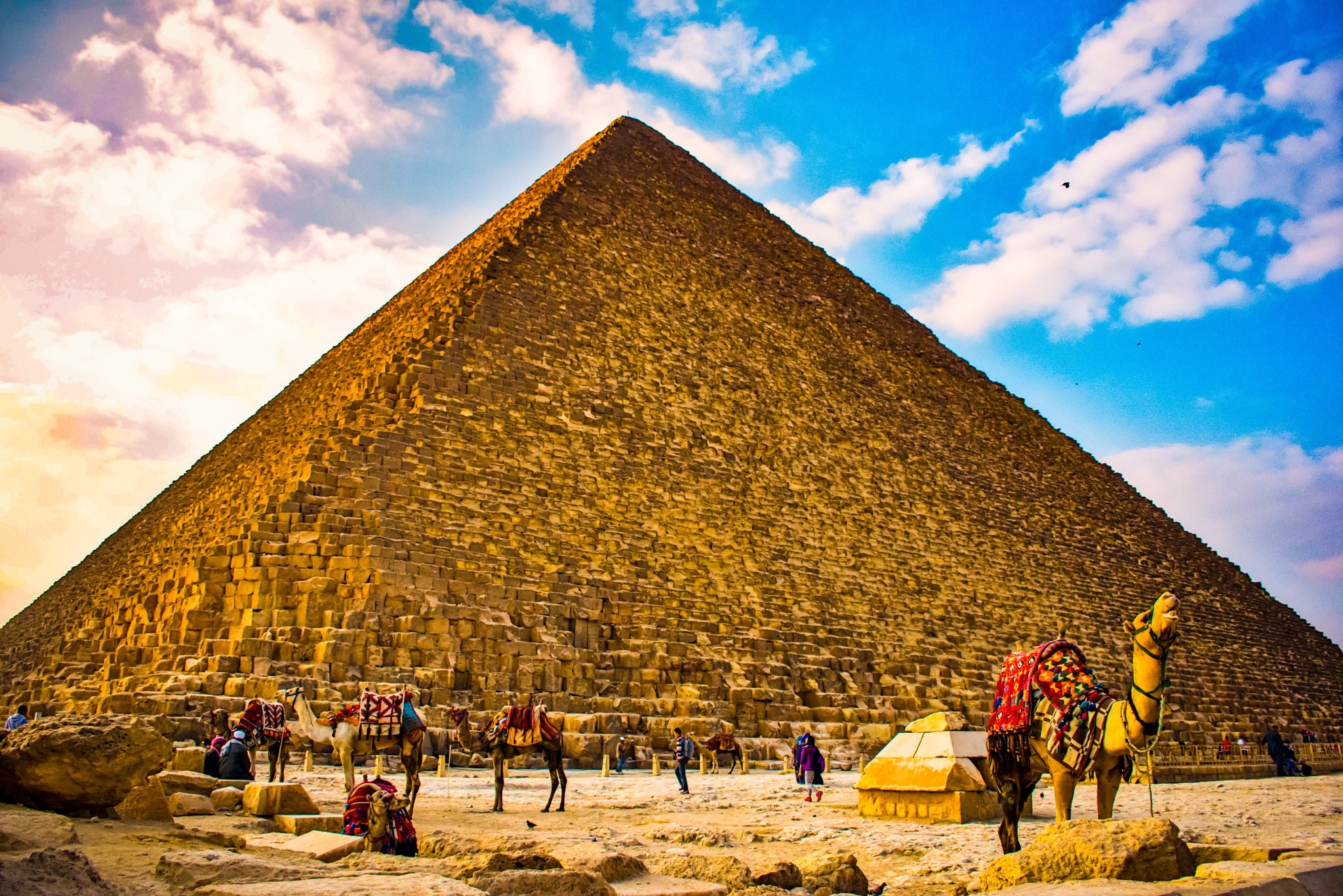
The sight that awaits you as you climb the incline from the entrance is nothing like you have seen before. Tall, humongous, majestic and touching the sky is the largest pyramid of Giza – Khufu’s pyramid. The size is unimaginable. Even more unimaginable is how they built it several millennia ago with none of the technology, tools or knowledge we have today! We spent a few minutes gazing up at the marvellous structure. The one structure that has been on our wish list for ages. The one structure that has lived through millennia. The one structure that inspired us to make the once in a lifetime trip to Egypt.
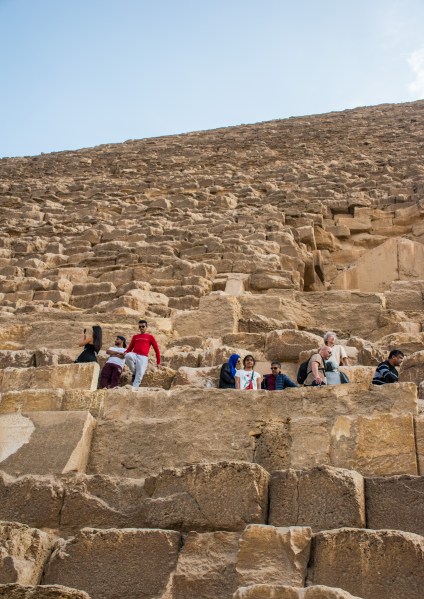
The plateau was a city by itself. There were horse wagons, tour buses, mini buses, cars, tourists, people selling their wares and everything else imaginable. It was quite chaotic. Galim, our guide took us up close to Khufu’s pyramid. The view of the great pyramid from afar and from up close if very different due to its vast site. Up close you only see huge blocks of stone and if you crane your neck upwards you could make out a slight outline of a triangle. The blocks at the base were easily 5 feet in height and about 3 feet across. Although at first sight they looked like they have have been stacked randomly and without any sort of binding you can figure out that there has been immense planning and effort involved in ensuring that the blocks met all conditions of engineering. Otherwise they wouldn’t have been standing for over 4 millennia. You could only imagine how they would have looked with their limestone casing intact. There’s still some limestone casing left on top of Khafre’s pyramid a few hundred feet away to give an idea.
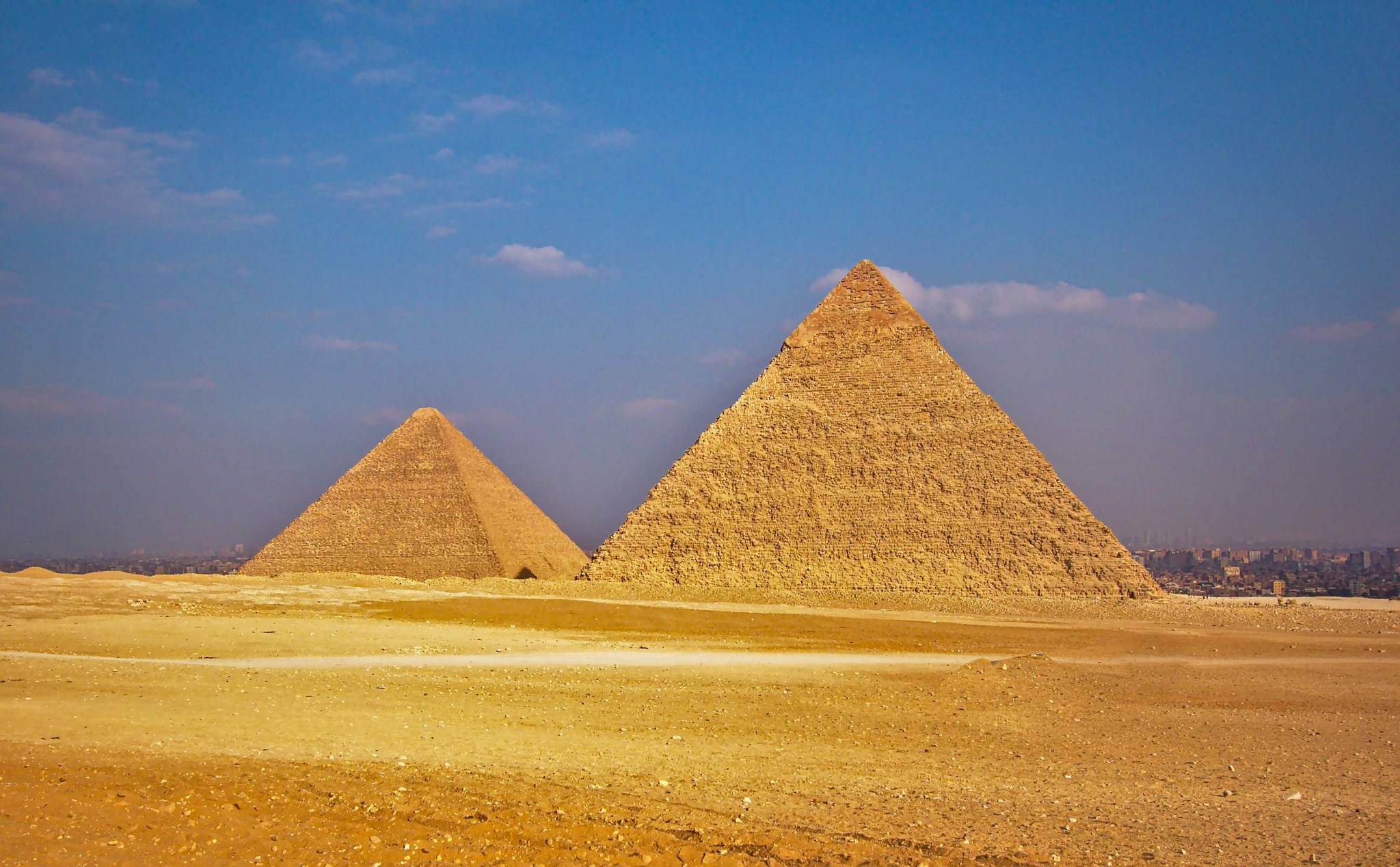
After clicking a few hundred pictures and climbing up the well hidden steps to near the mouth of the pyramid, we took our van to the look out which had 2 of the three pyramids in view. Again, due to lack of time we could not go to the desert view point with a view of the 9 pyramids. This look out was quite crowded and after spending a few minutes we headed to the Solar Boat museum.
Solar Boat Museum
If there is one thing that you need to do other than gaping at the pyramids it is this! Only in the 20th century while the excavations continue in the Giza plateau, the boat pits were discovered. Located next to the Khufu pyramid the cedar boat was found in pieces in the boat pit. It was probably disassembled when the mortal remains of Khufu were brought in to the great pyramid (around 2500 BC) through the Nile and the canals and were left behind to be used in his after life. However it has been in great condition through all those years. It has been painstakingly put together piece by piece like a giant jigsaw puzzle using only ropes to bind them together.
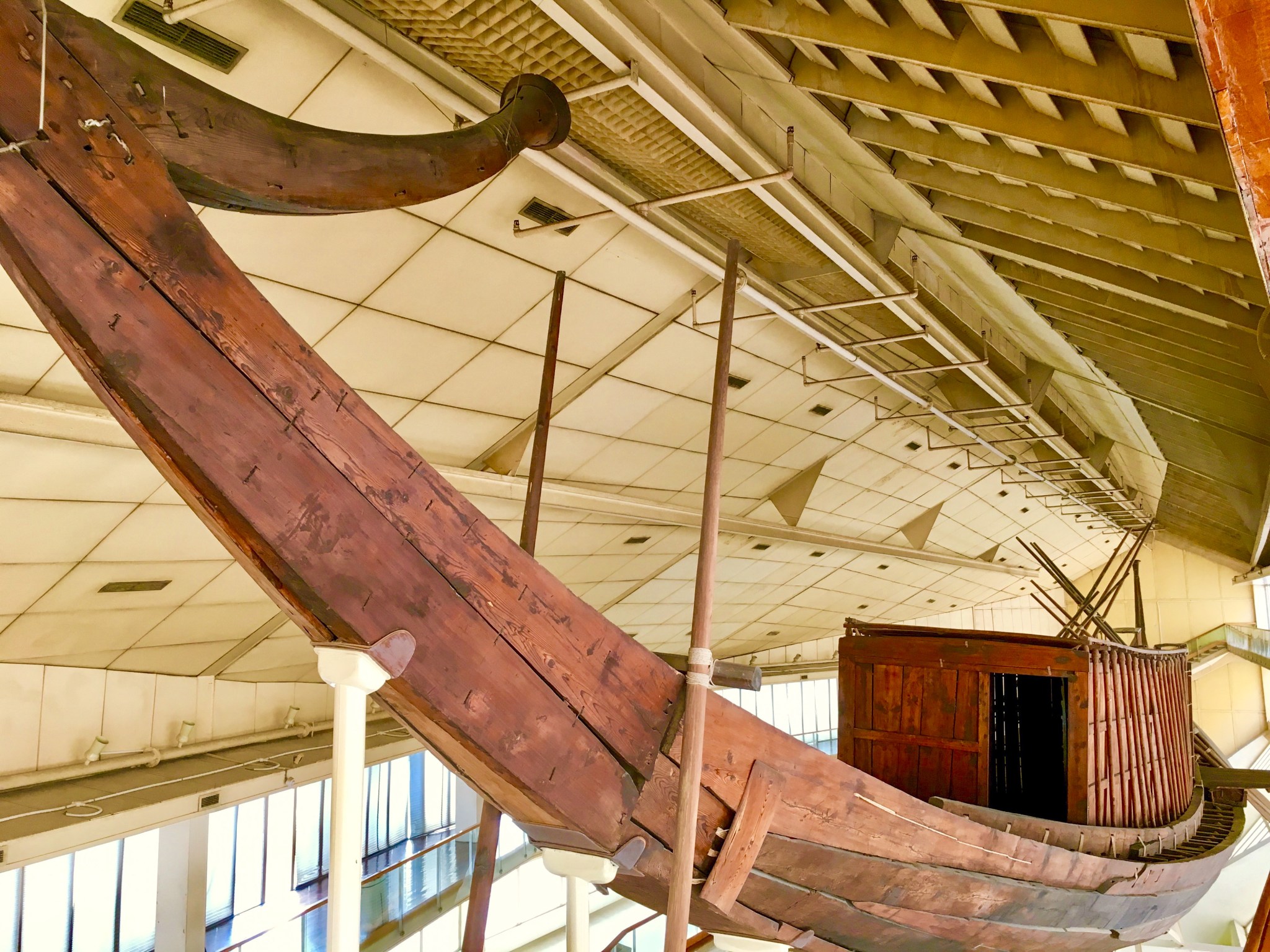
You have to cover your shoes when you enter the museum to help with the preservation of the boat. There’s load of information about the boat and the way it was reconstructed as well as a model of the boat. I was all the while wondering where the boat is and kept glancing towards the rear but there was none in sight. Galim walked in a little while later and just pointed out some highlights in the museum and I asked him where the boat is now. He asked me to look up and I stood stunned for a minute. Right above us, suspended was the longest boat I have ever seen in my life that I couldn’t even spot the stern or the bow. That was all it took for us to stop with the unnecessary details about how the boat was built and we quickly climbed the stairs to look at the actual thing. The sight gave me goosebumps. Cedar wood from over 4000 years ago, carrying the mortal remains of one of the greatest ancient pharaohs of the world, a man about whom nothing much is known except for some of the greatest legacy he has left behind for us to gape at after several thousand years. I almost wanted to reach out and touch the boat just like I had caressed the stone blocks of the great pyramid a little while ago – an important relic in the history of mankind!
The Sphinx
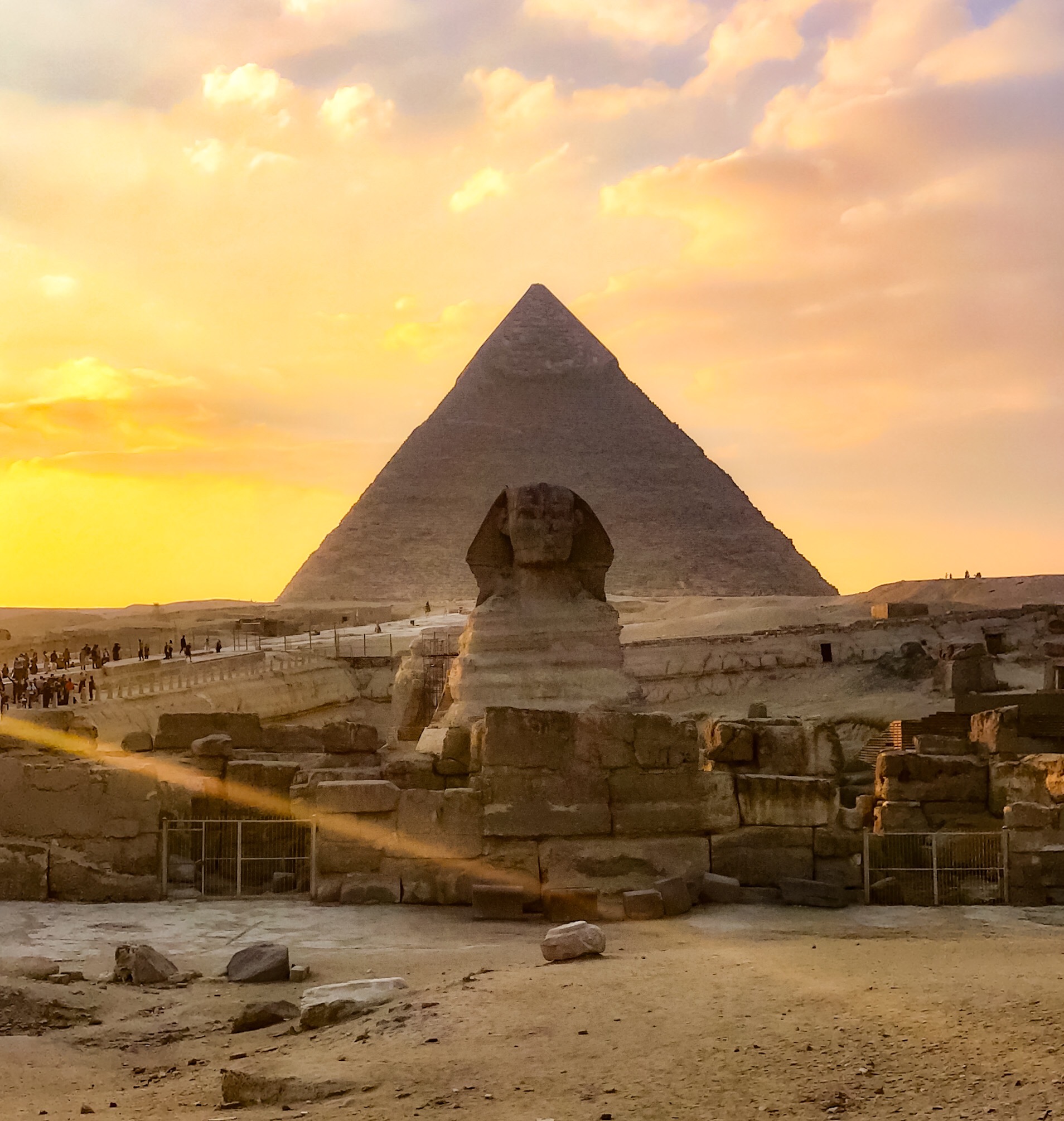
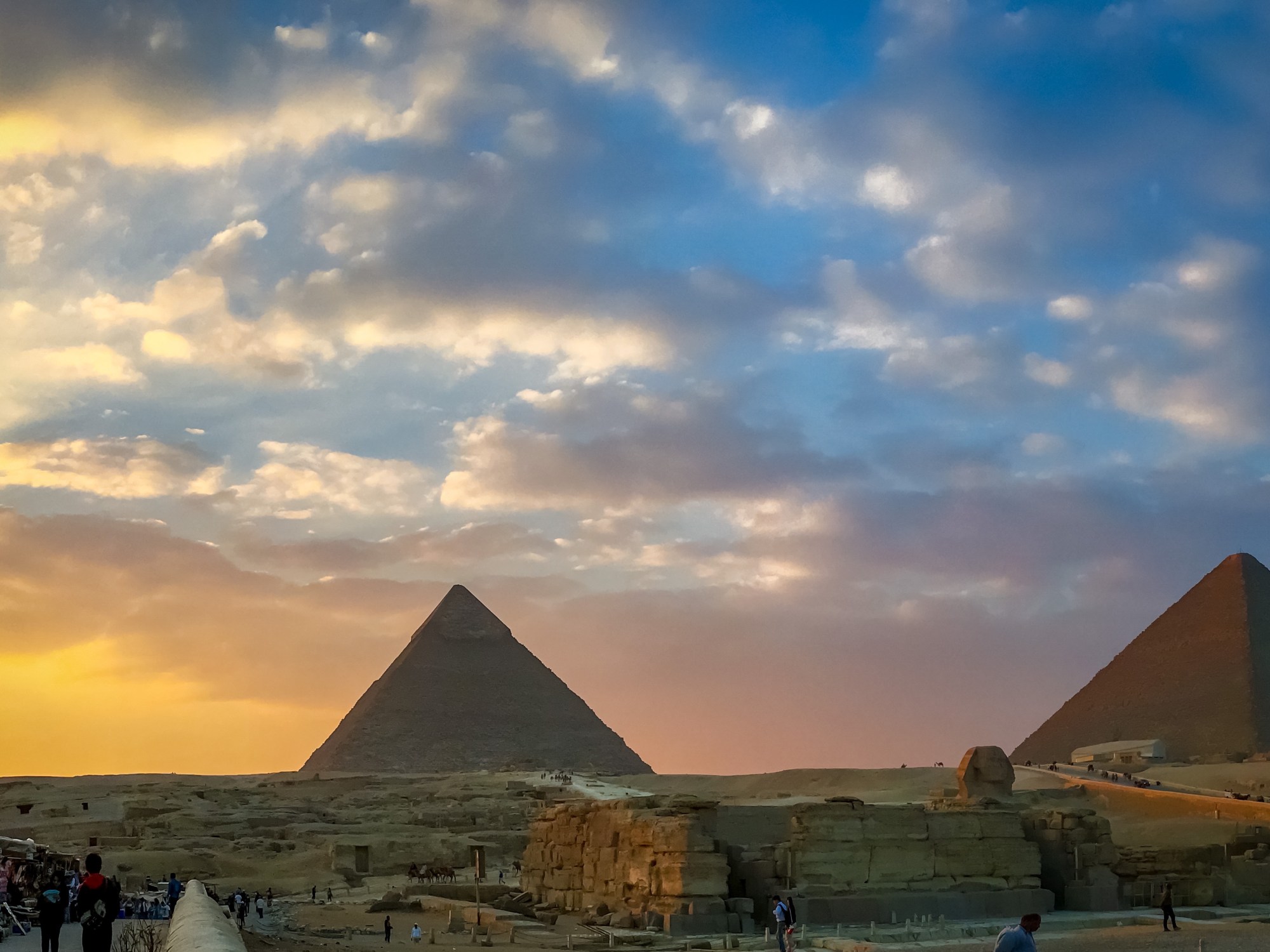
We were taking considerable time that our guide approached us and asked us to quickly make our way out and down to the sphinx so that we could see that and Khafre’s pyramid before the plateau closed. It was almost a surreal experience walking between the two pyramids down to the sphinx. The size of the sphinx is again unimaginable. Though it looks tiny when looked at along with the pyramids in the back ground it is a huge monument by itself. I suppose there are entry times that let you walk inside the sphinx complex but with our loaded day we never got a chance. Great amusing stories have been told of the missing nose and beard. It makes not one iota of difference to the imposing structure that was in front of our eyes. We then quickly hurried to the walk path so that we could catch a glimpse of the sphinx’s profile and also of Khafre’s pyramid. The sun was making it’s way down fast and it was the golden hour of sunset. The site would be closing soon. One last longing look at the pyramids and the sphinx.. taking in the vision and remembering how they have stood the test of time and then we started our walk back towards the exit passing the chairs that have been laid out for the light and sound show that will take place later in the evening.
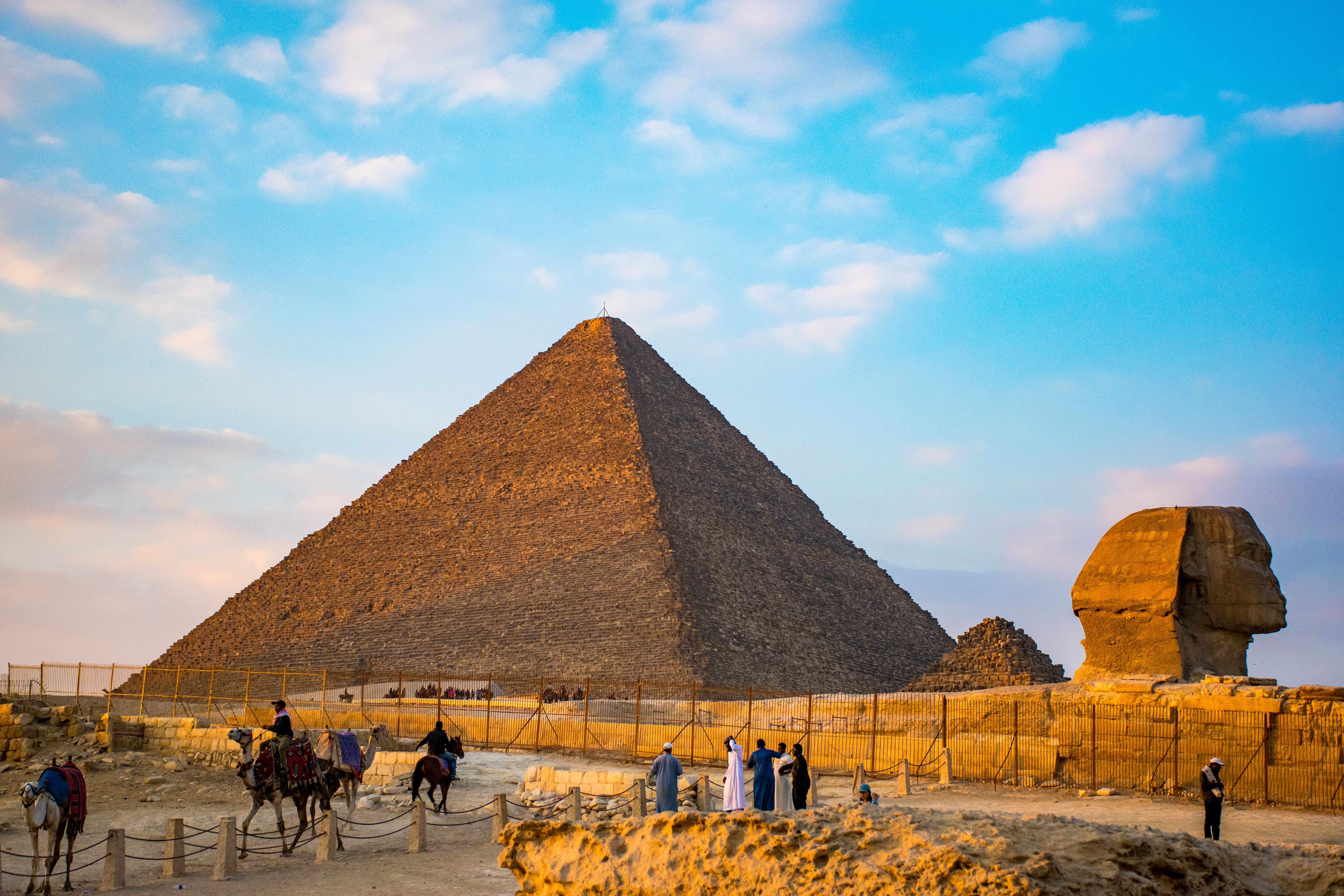
We declined offers of shopping and headed back to our hotel in silence reminiscing over the great things we had seen during the day. After a quick dinner at the rooftop restaurant in Novotel (the outdoor seating offering views were sadly booked by outside guests) we retired for the night with a lovely feeling of contentment.
 Fly ✧ Ride ✧ Drive