
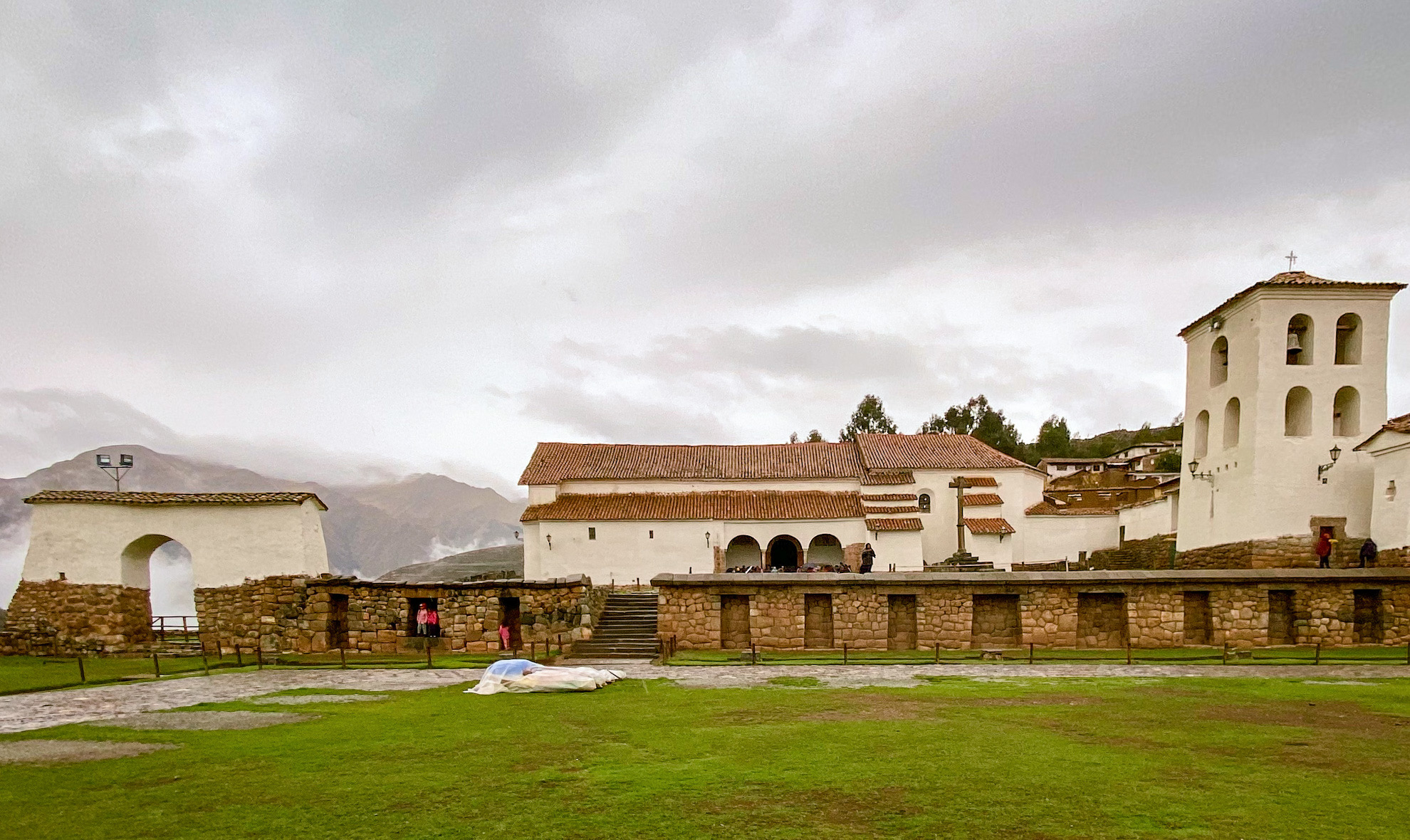
We woke up to a rainy morning on the 5th day into our trip. This was a long trip by our usual travel standards so our bodies had taken a beating. Along with altitude sickness I had to put in extra effort to actually get ready for a tour of the Sacred Valley. Apu Lodge had a lovely garden and from the garden we could spot tall mountains all around us. With the sound of running water and birds chirping it felt like a paradise on earth!
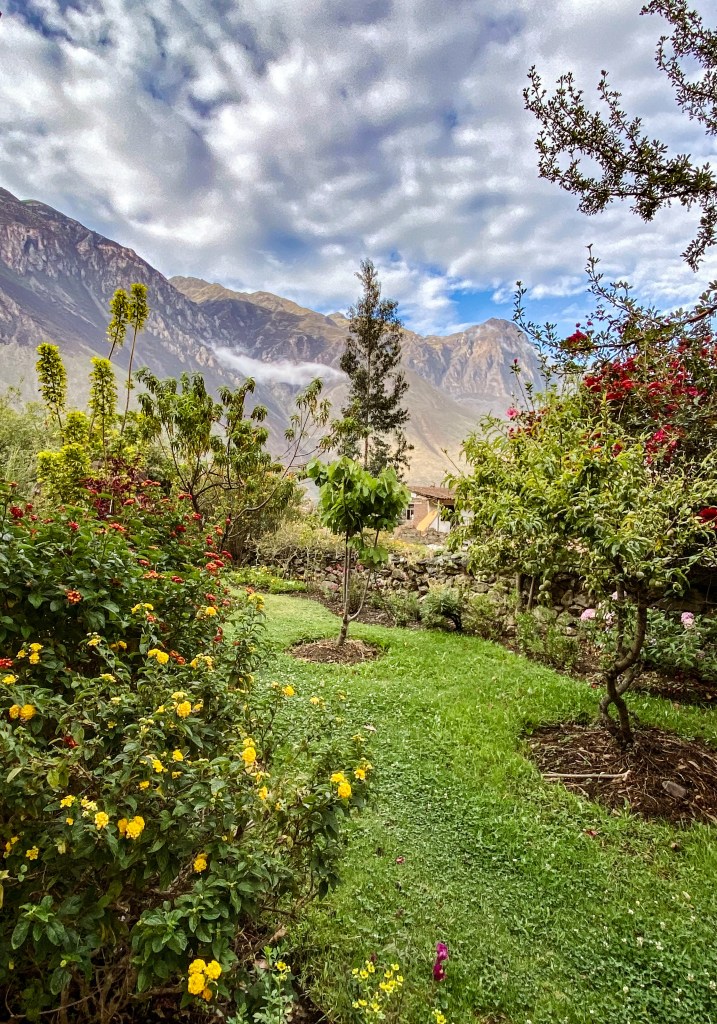
We walked down to the town square after a decent breakfast that also had locally grown fresh fruits and freshly squeezed juice, something that is a privilege in tropical countries! Eddie met us with his car and we clambered in looking forward to visiting the sights in the Sacred Valley. We were going to visit one of the highest towns in this part of the world and our climb up gave us some pretty lookouts over the city of Urubamba in the valley below. It was getting cloudier and a drizzle enveloped us as we drove further up.
Jump to:
The Sacred Valley
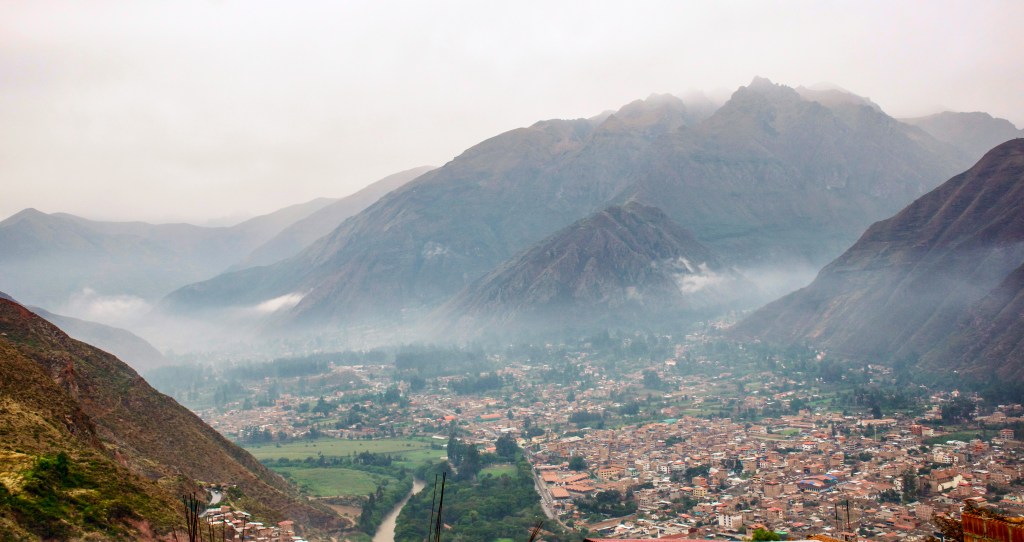
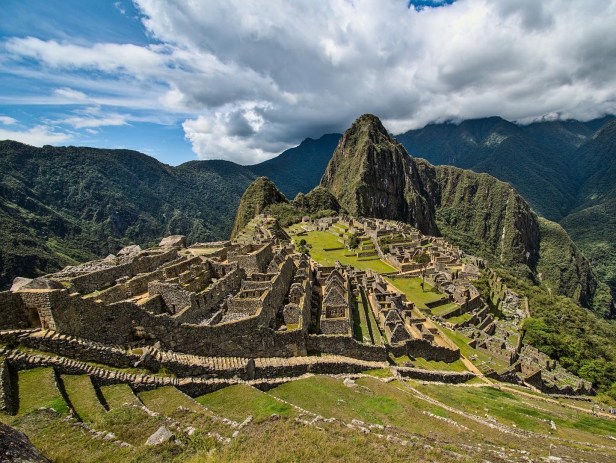
The Sacred Valley of the Incas stretch north of Cusco deep into the Andes mountains and has been populated by the Incas for several centuries. Being lower in elevation than Cusco, the Incans’ centre of administration, the Incas were drawn to the valley for its warmer climates and the ease of farming. There are many sights along the valley and some towns like Ollantaytambo have been lived-in continuously ever since the 14th century. Some of the spots have important history behind them. Machu Picchu lies at the other end of the valley with the towns of Pisac, Ollantaytambo, Maras, Moray, Urumbamba and a few more non touristy towns and sites between it and Cusco. The trains and hikes to MaPi start from the Sacred Valley. Ollantaytambo, with its beautiful location, old world charm, lower elevation and the start of the train to Aguas Calientes, makes an ideal base for exploring the Sacred Valley. Nearby Urubamba is a larger city with more resorts and hotels available but it takes a taxi ride to get to Ollantaytambo to get on the train to MaPi.
The sites in the Sacred Valley are covered by their own admission tickets known as the Boleto Touristico (BTC). There are 4 different varieties of the ticket. The “Boleto Integral” that covers all the sites in the region including most of the sites and museums in Cusco (except Qorikancha) and costs 130 Soles for adults and 70 for students and under-18s. Then there are regional BTCs that cover museums and sites in specific regions like the Sacred Valley, sites in Cusco and museums in Cusco. The regional BTCs have a validity of 1 or 2 days while the BTC Integral have a validity of 10 days. We chose the BTC Integral as we were planning to visit over 3 days or more.
Chinchero
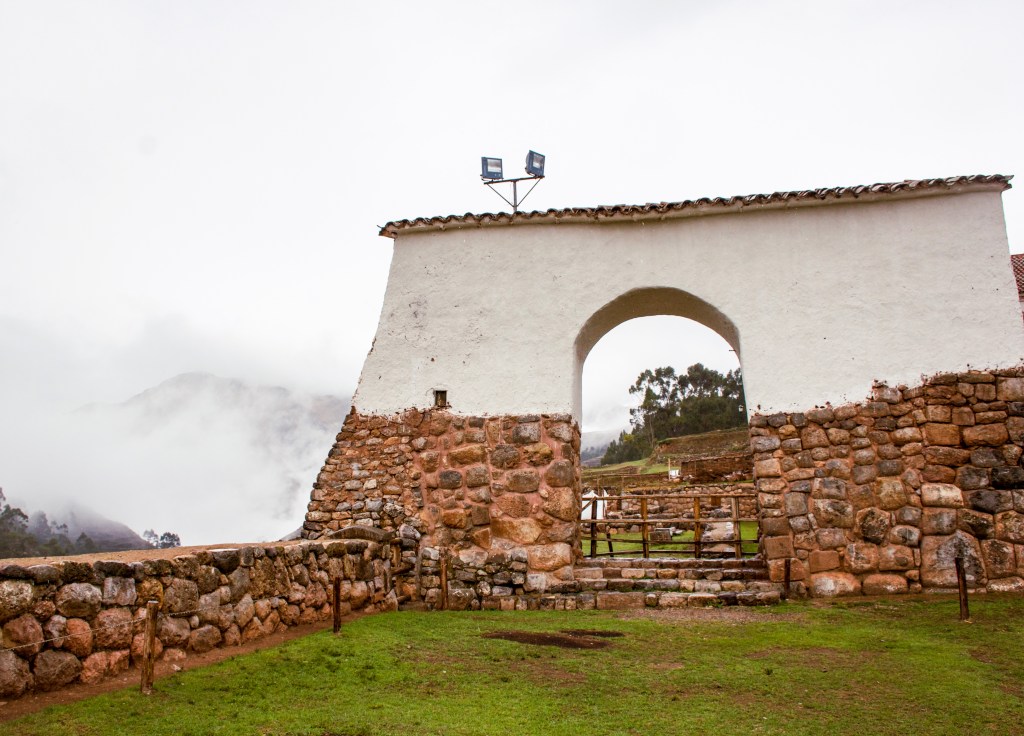
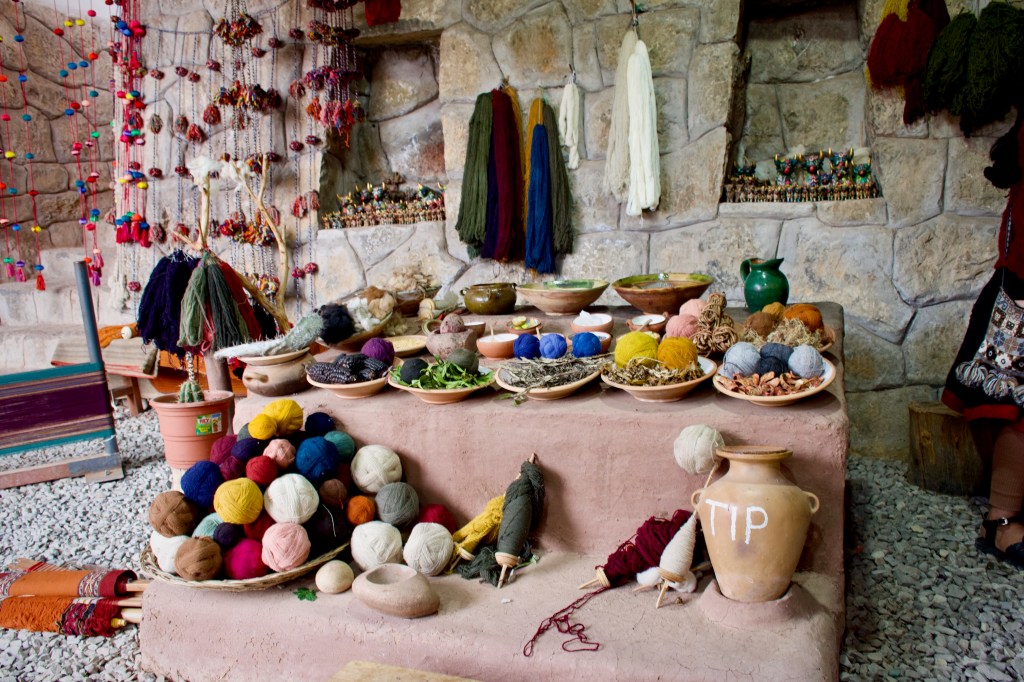
Located at 3800m or 12000 feet above sea level, Chinchero is known as the birthplace of the rainbow to the Incas. There’s a colonial church built on top of Incan ruins and a market in the town. Chinchero is also known for its weaving and Eddie recommended that we stop at a weaver’s cooperative for a demonstration and some shopping, if interested. It was a small coop with only women running it and one of the ladies demonstrated the different wools available and how they were treated before being spun into yarn and the natural pigments they used for colouring them. Baby Alpaca wool is considered the softest and the most expensive followed by adult alpaca wool. Acrylic was also sometimes mixed to make the garment cheaper. We decided to pick some adult alpaca scarves for me and Shash and grab a couple of pictures with the alpacas and llamas that were outside the coop. Apparently Alpacas do not like the water and their wool is always dirty!
Eddie then drove us to the Chinchero site and parked near the entrance to the site. We purchased our Boleto Turisticos and climbed slowly and painfully up beautiful cobbled streets to see the Incan ruins. The view was spectacular from the site. Clouds were dancing all around us and the slight drizzle made it look ethereal. It was christmas day and there was a service going on in the church. It was pretty crowded that people were spilling out of the entrance. There was no market outside the church probably due to the holiday. We walked around the site taking in the views. There was a small museum that displayed some details about the history of the site and some artefacts recovered. It was a good respite from the rain. We then walked back down to the car. The cobbled path was quite slippery due to the rain. The Chinchero market is also popular but it was pretty deserted when I peeked in. Since there weren’t many shops set up we got back into the car to ride to our next stop.
Maras
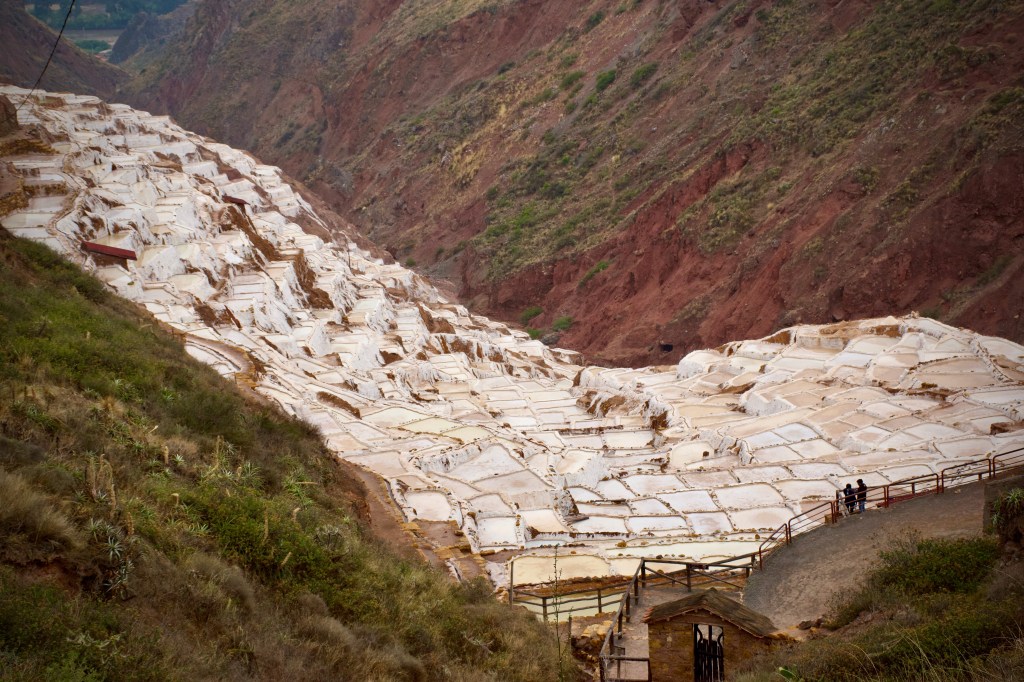
Our next stop was at the salt mines of Maras (Salineras de Maras). Salt has been mined here continuously since the pre-Incan times. A subterranean salty stream runs into terraced ponds down the hill side which is then evaporated for salt crystals to form. The whole mine is run by a community and they work in good understanding among each other ever since the Incan times.
The ride to the entrance to the Mines was an experience in itself with mountains looming large on either side of the plateau we were driving through. After we purchased our tickets (10 soles each and not covered by the BTC) we drove a few hundred feet down into the valley below. After Eddie parked the car we walked further down to the ponds reminding ourselves that we had to hike back up!
The white and some muddy terraced ponds was a sight that we hardly get to see in rest of the world. There were people working in some of the ponds. After viewing the ponds from different levels we started our hike back up stopping at the shops along the way where we got ourselves some souvenir and some salt before getting back into the car for our ride to the next stop.
Moray
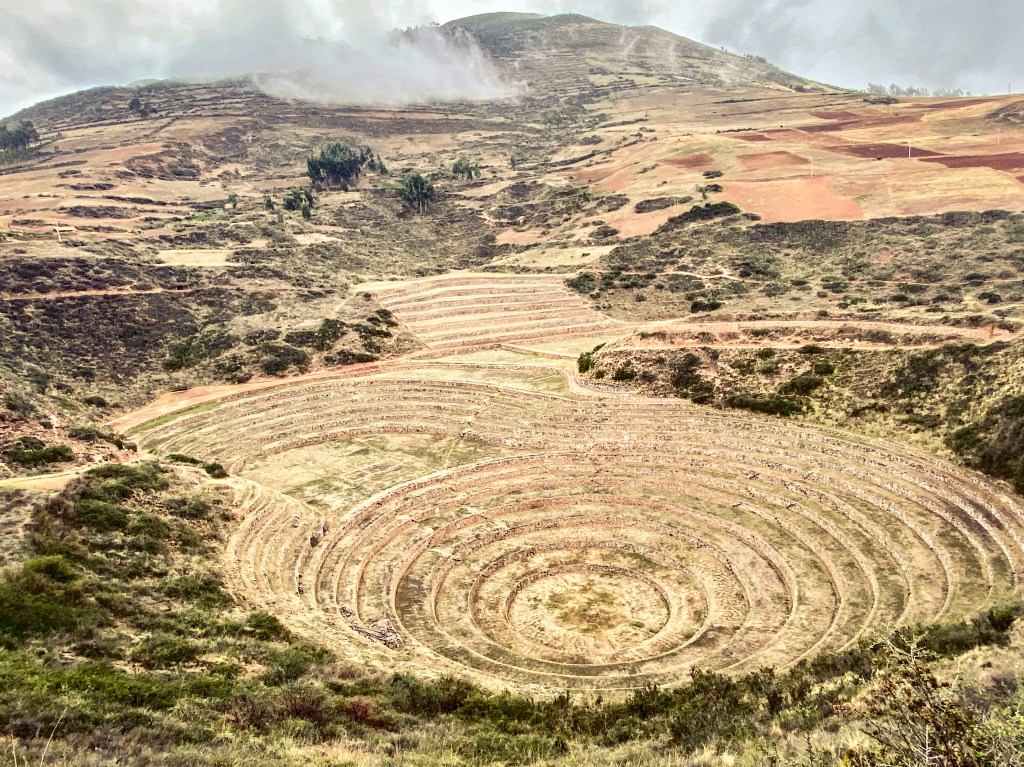
The Moray crop circles were developed as an agricultural lab to test the ideal crops to be grown. Each of the terrace had a microclimate and ancient Incas tried out the crops that were suitable to be grown at each level.
This was the last stop on our itinerary and by the time we got here I was starting to feel very tired and sick. We didn’t venture to see the crop circle below and saw them only from the top. After a few pictures we headed back to Ollantaytambo for lunch.
Lunch was at Apu Veronica and their food was excellent with a load of vegetarian options available. We had the pumpkin soup, the Apu, burritos and pasta and they tasted delicious after a long day of sight seeing.
Once we returned to our room I realised I had developed a temperature and was at my wits end as our biggest day was the next day! I decided to rest up well and brave it!
Dinner was once again take away pizza from the same restaurant on the square – La Esquina. Nancy spoke to us about the breakfast arrangements for the next day as we were going to be leaving before they started serving breakfast. We went to bed early looking forward to a our most awaited day!
On day 6 into our trip we visited Machu Picchu. Since it deserves it’s own post, you can read it here.
Ollantaytambo
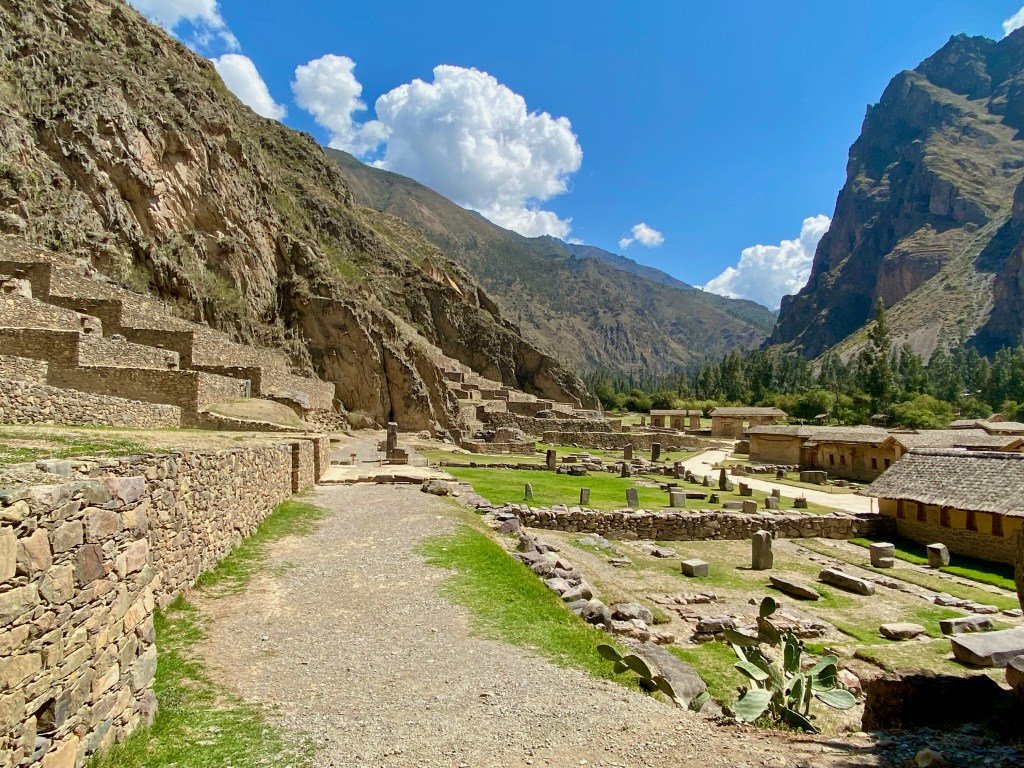
Ollantaytambo has been part of the Incan empire ever since the 15th century. Emperor Pachacuti built the terraces and the sites soon after he took over this part of the Urubamba valley. Many Spanish expeditions were defeated in Ollantaytambo even after Cusco had fallen due to its advantageous position on the sides of the hill where they could see the Spanish conquistadors approaching. The ruins are located in the northwestern corner of town easily walkable from most parts of the town.
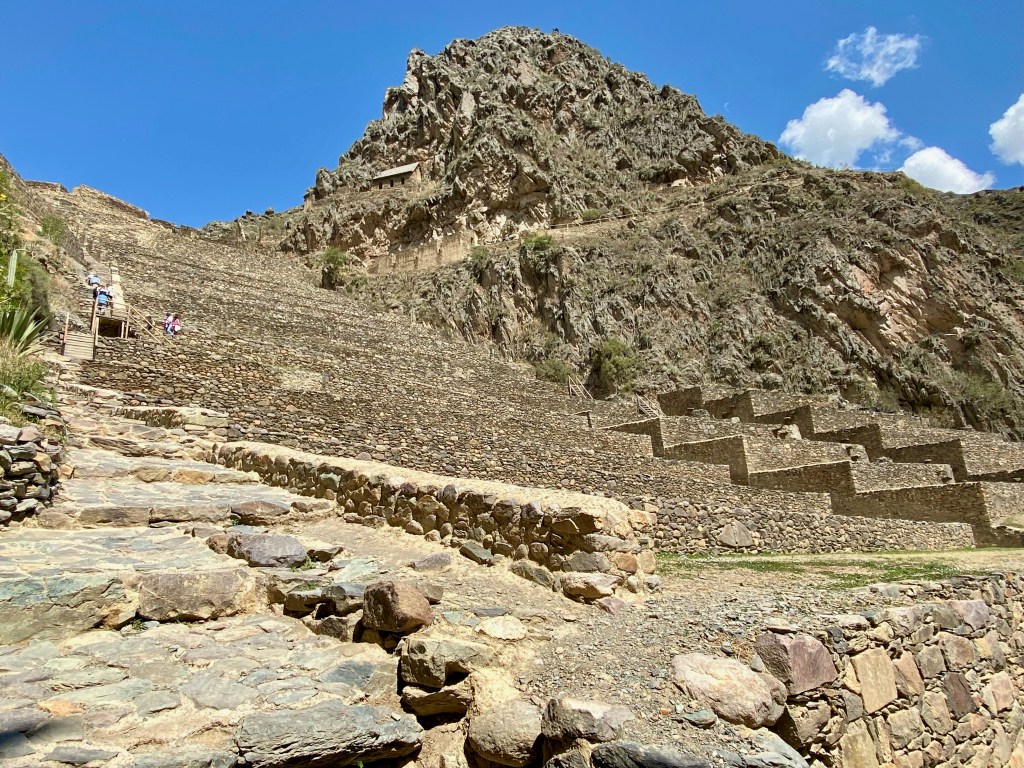
We wanted to make a quick stop on the 7th day of our itinerary before we left this part of the world. Hence we walked over to the ruins from Apu Lodge at about 9 in the morning. It was bright and sunny and we were one of the few to enter the site at that time of the day. The site was almost deserted and we walked up the stone terraces to see the whole of Ollantaytambo and its grid like layout spread out before us. The view of the valley from this spot was spectacular. We then came down the way we went up as it was getting hot up there. We then visited the water temple with its running water that offered a pleasant respite from the heat.
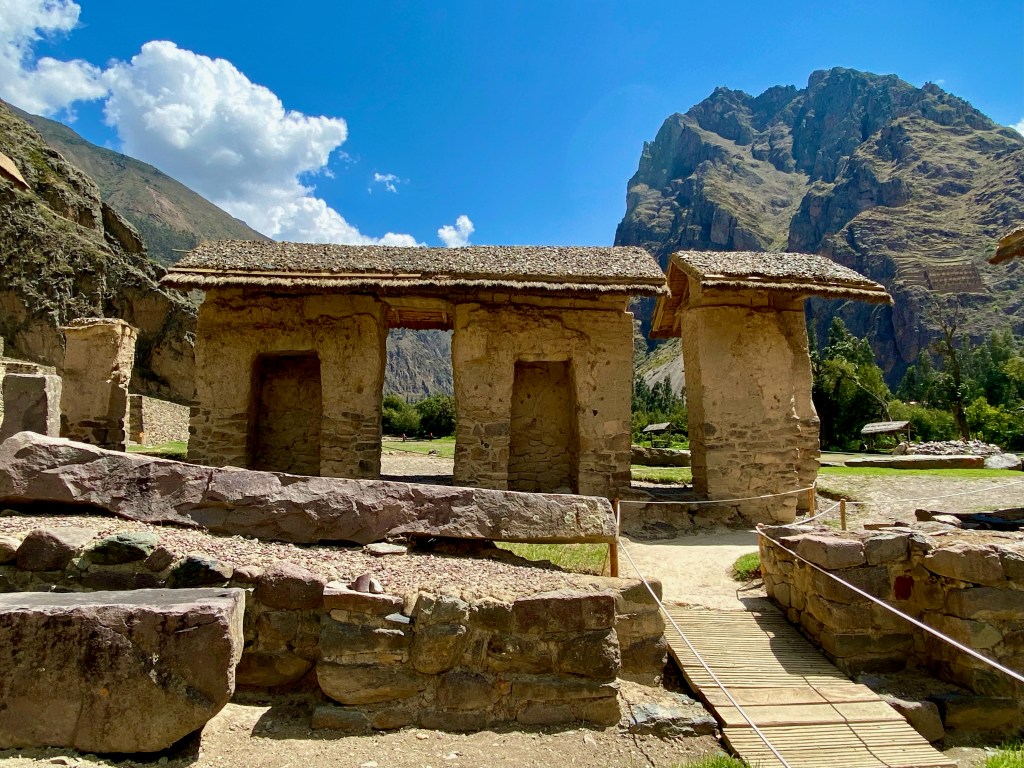
We walked out to the market where Shash bought herself a wide brimmed souvenir hat from a lovely lady who spoke very little English but was very friendly. We made our way back to Apu Lodge to pick our luggages up and walk back to the square for one last time to make our ride to Cusco.
This part of the world is simple, loving yet vibrant in it’s own way. I would never forget the views of the peaks around us when I woke up in the morning and walked over to the reception of Apu Lodge to grab my fix of coca tea for the day!
Pisac
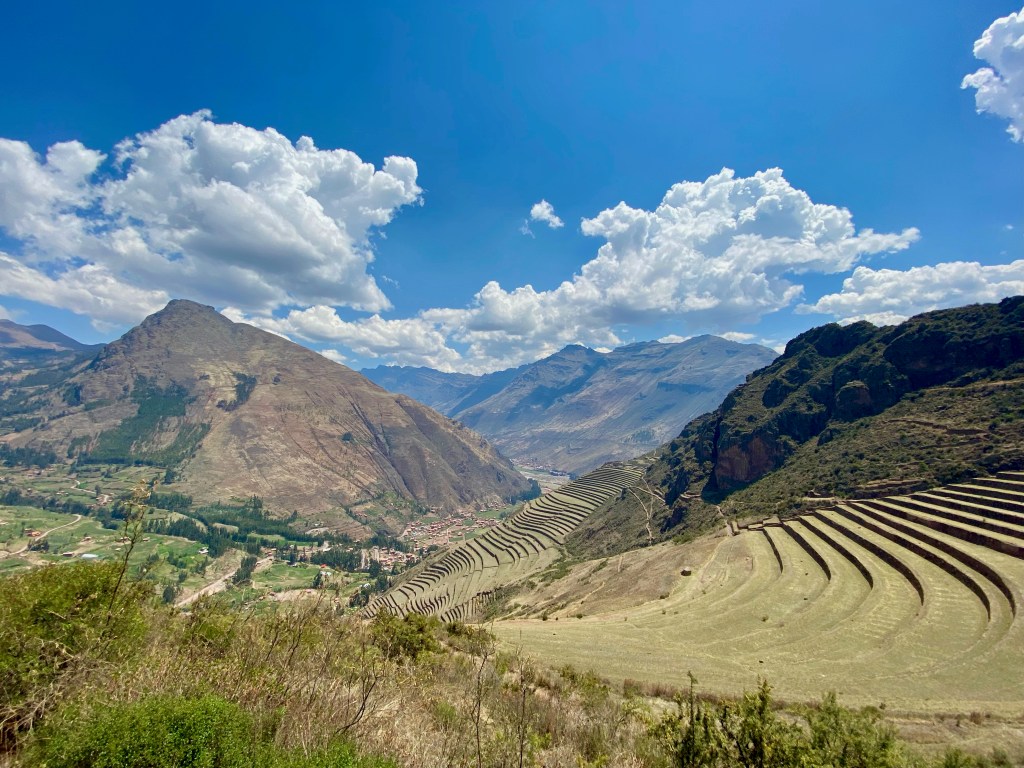
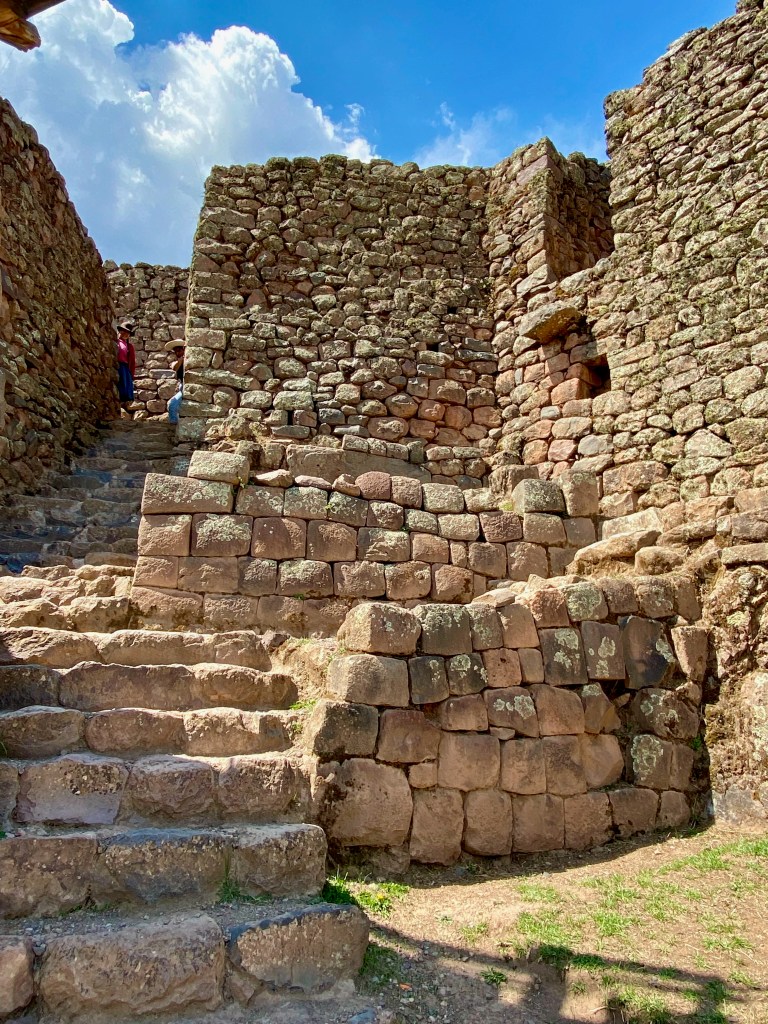
The city of Pisac is famous for its market and its ruins. We first drove up to the ruins. The stunning feature of the ruins was its location overlooking the valley and its agricultural terraces set on the slopes of the hill. We were greeted by a bunch of structures in stone when we entered the site which then lead us on the agricultural terraces that looked like slices of avocado lined up. It was very windy and we were careful not to venture very close to the edges. We passed the terraces and into more stone structures before we decided to return as it was getting windier and we had to climb higher to explore the remaining parts of the site.
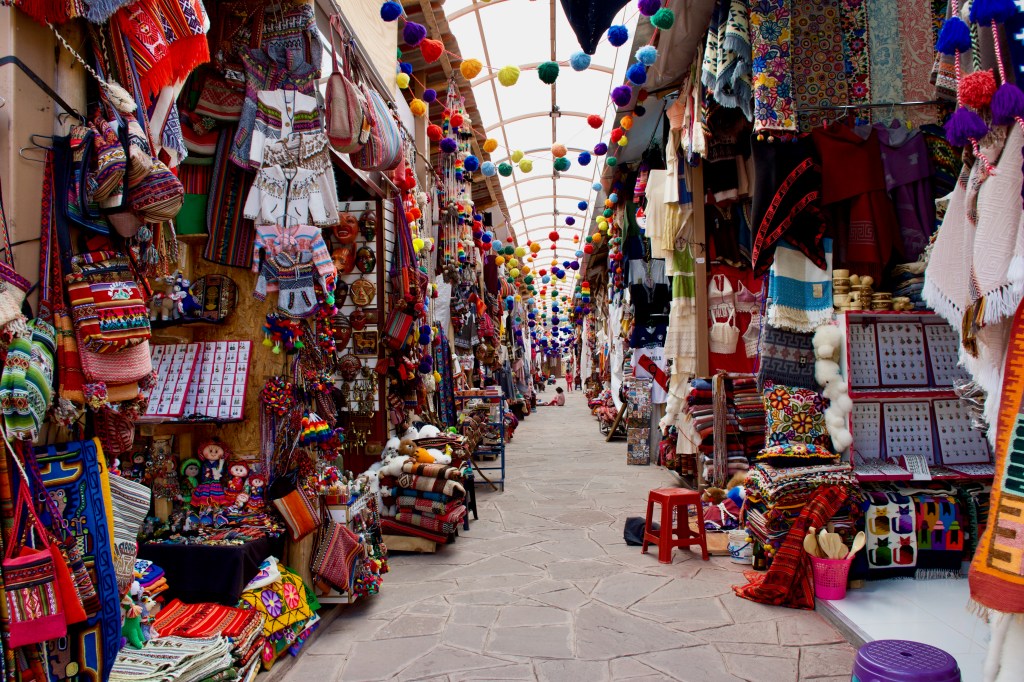
Another special feature of this town were its empanadas. We asked Eddie to stop for us in the shop that sold the “famous empanadas” and he took us to this most non-touristy place that we’d have probably been to in this entire trip. We grabbed one savoury one sweet empanada for each of us and Eddie drove us on to the town square where he gave us directions to the market. We quickly gobbled our empanadas sitting in the one of the benches in the square admiring the colourful and vibrant town around us. It was a weekday. Yet it appeared quite busy. After finishing off our quick lunch we set out to explore the market. The market was quite deserted as was most places in this country probably because of the cancelations. We walked around looking at the merchandise some way over priced and some not so much. We bought a beautiful carved flute, small painted bulls and two ponchos made of alpaca wool. The ponchos were so warm and cosy as soon as we wrapped them around our shoulders. Being content with our purchases we walked back to the car to begin our ride back to Cusco that would be our base for the next two days.
 Fly ✧ Ride ✧ Drive
One thought on “Sacred Valley of the Incas”