
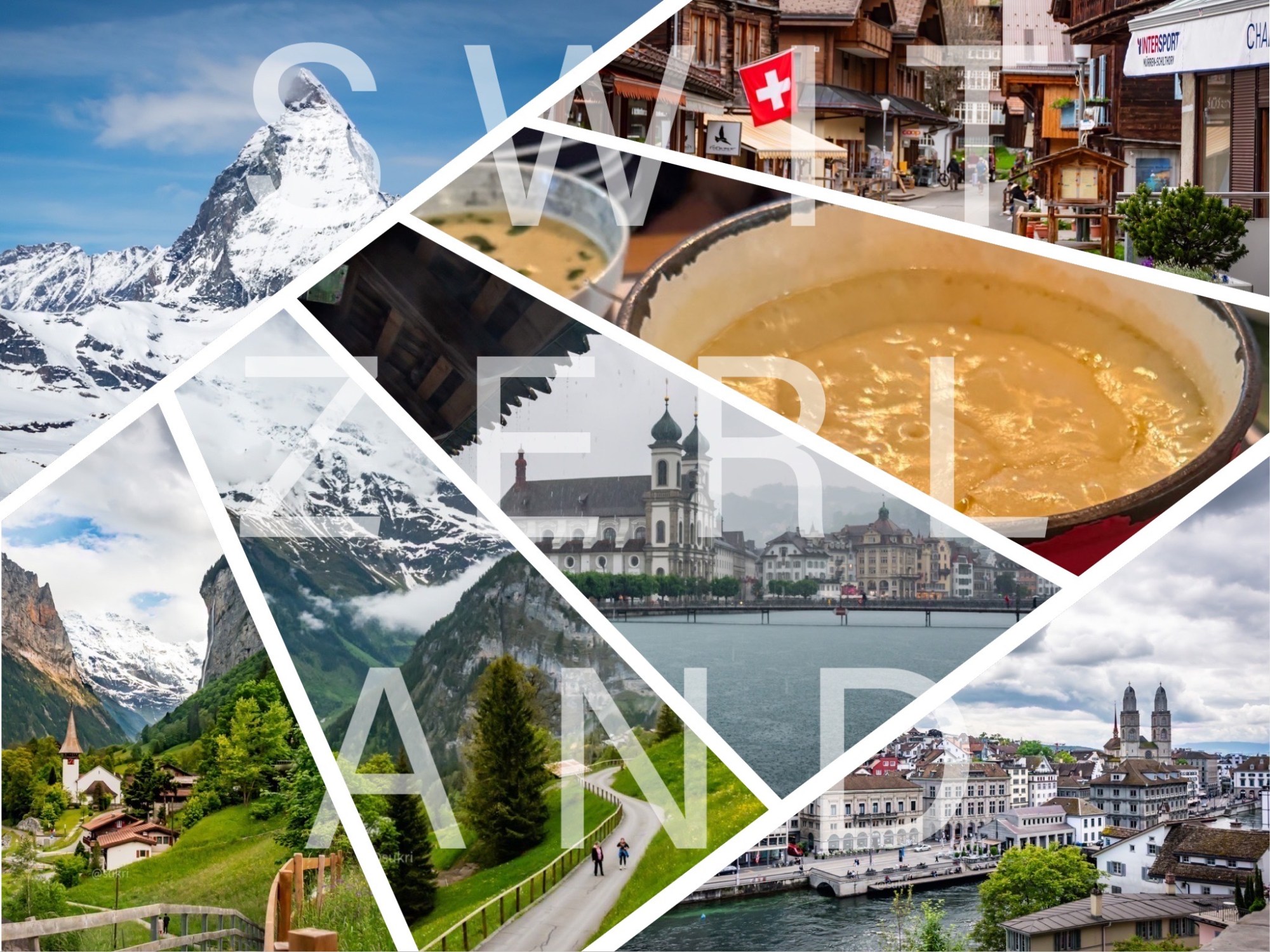
Switzerland is perhaps the most expensive country in mainland Europe and also a must visit on every traveler’s itinerary. After two trips to this country, here’s some of what I learnt and that which helped me plan both the trips.
Table of Contents
Regions
Zurich – Lucerne
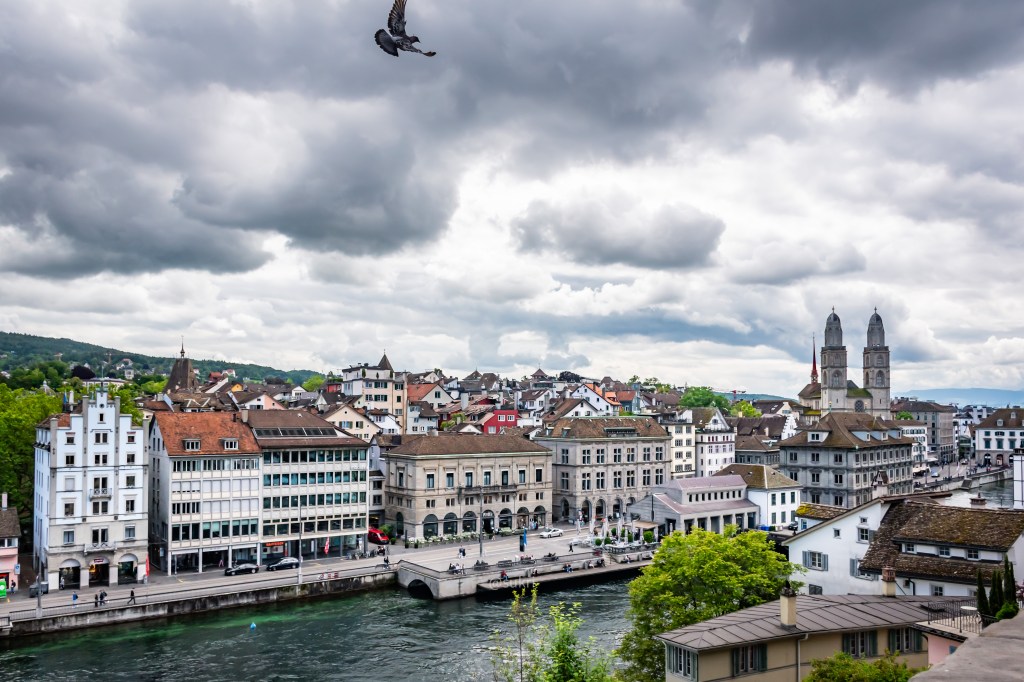
These two cities are quite close to each other and hence staying in one would help you visit both. However if you want to explore the lakes and mountains around Lucerne, you need more time. 2-3 days between Zurich and Lucerne would be ideal.
I have not visited the mountains and lakes around Lucerne. I prefer the Bernese Alps and the Pennine Alps of late. They are higher, have more hikes and have better scenery in general. However the area around Lucerne is said to have excellent scenery with mountains and lakes alternating.
Highlights
- Zurich
- Lindt Chocolate Factory
- Uetliberg
- Walk around city centre
- Lucerne
- Walk around old town
- Scenic boat rides
- Excursions to Mount Pilatus, Mount Titlis, Mount Rigi
Bernese Alps

Two popular valleys with popular towns of Lauterbrunnen and Grindelwald, bustling hub of Interlaken with quick connections to rest of the country, the gorgeous lakes of Thun and Brienz, car free villages, glaciers, snow capped peaks, popular excursions, countless hiking trails for all levels of fitness, waterfalls, rivers and Alpine lakes. Sounds like heaven? It does and many people think so too. That’s why its probably one of the most expensive and crowded parts of Switzerland. Popular towns to stay are Lauterbrunnen, Grindelwald and Interlaken. They are also expensive and rooms are quickly filled. Mürren, Wengen and WIlderswil are quieter and smaller. Spiez would be a good alternative as well but a little away.
Highlights
The towns and villages are pretty themselves and make for a great way to spend your time. Other than the towns of Lauterbrunnen and Grindelwald, there’s
- Lauterbrunnen town
- Grindelwald
- Valley trails
- Trümmelbach Falls
- Excursion to First
- First – Buchalpsee hike
- Mürren
- Wengen
- Hiking trails from Mürren and Wengen
- Jungfraujoch
- Scenic boat rides on Thun or Brienz and hikes from stops along the lakes
Lake Geneva
This is the French speaking part of Switzerland with Lake Geneva is its centre piece. There are some beautiful towns along the shores of the lake like Vevey, Lausanne, Montreux and the city of Geneva itself. A little away is the charming own of Gruyères. It also happens to be the wine growing region of Switzerland and towns like Vevey boast of great views over the vineyards, lake Geneva and the French Alps in the distance.
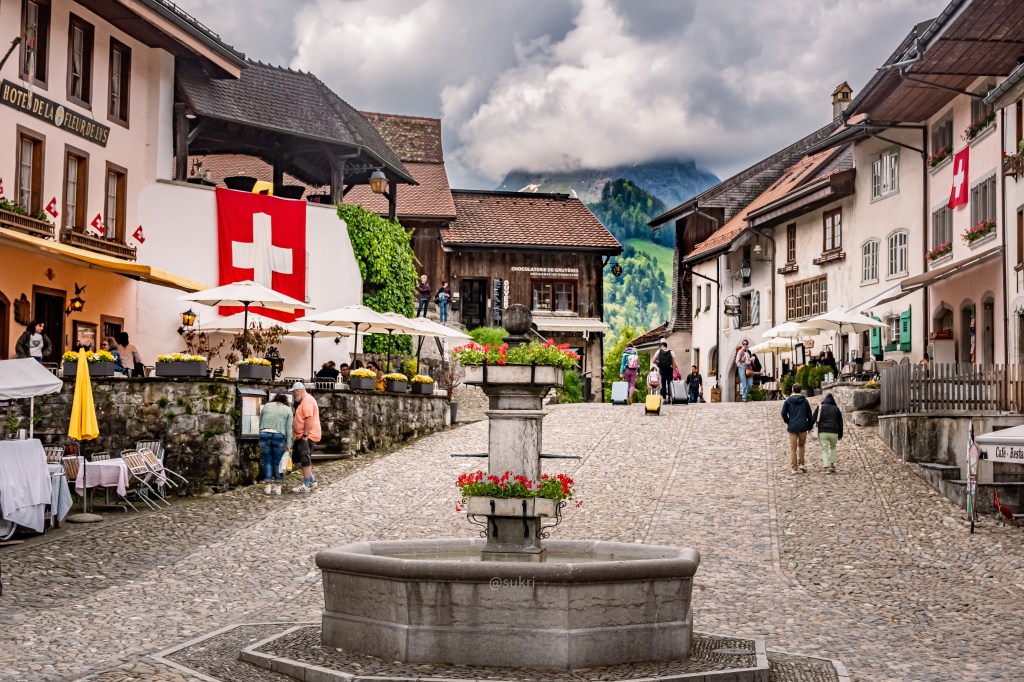
Geneva has some popular organisations like the UNESCO world HQ and CERN. The architecture in Geneva is significantly different from other Swiss cities.
Zermatt & Pennine Alps
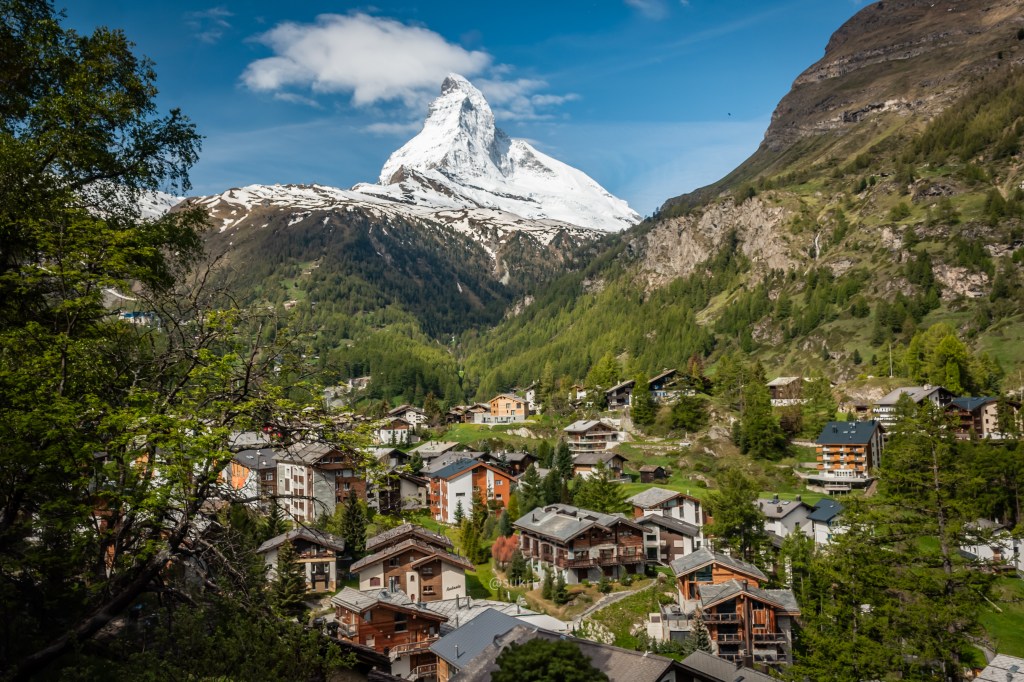
Zermatt is the quintessential Swiss resort town. Wooden chalets, ton of restaurants, mountain excursions, hiking trails, skiing trails in winter. There’s so much to do here for at least a week!
- Walk around the town of Zermatt
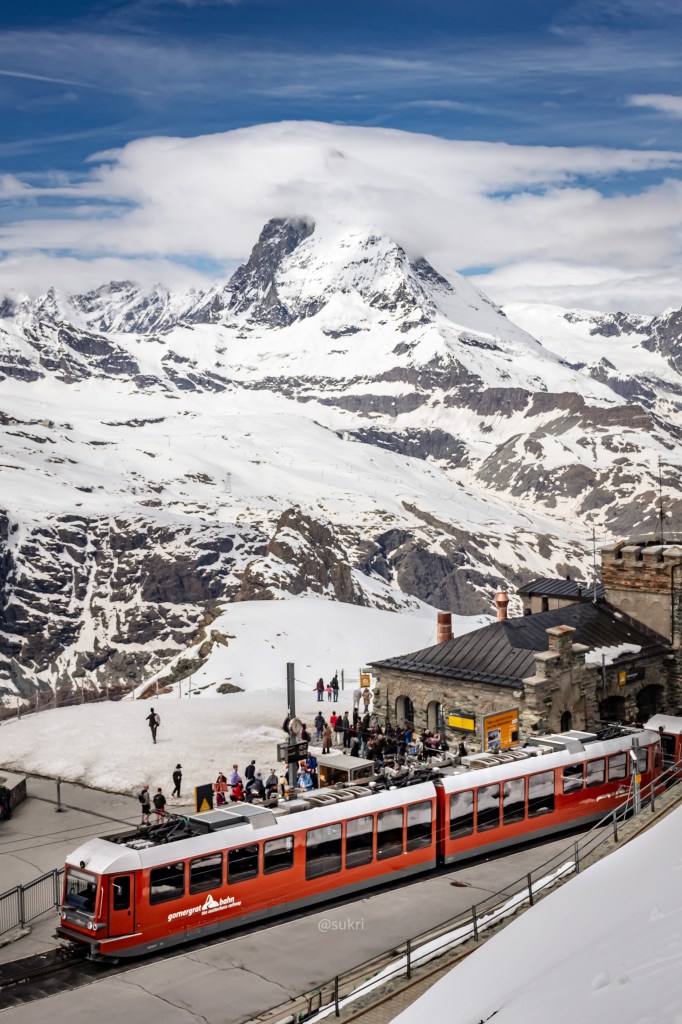
- Gornergrat and the hikes from the different stops
- Glacier Paradise with hikes from different stops along the way
- Sunnega, Blauherd and Rothorn
Itineraries
Planning an itinerary in Switzerland
There are three major highlights in Switzerland
- Mountains
- Lakes
- Cities
I usually recommend an itinerary that covers one of each of the above. Depending on what you like you could come back to visit in greater depth. However it is easier said than done. Simply because there’s just too many mountains, lakes and cities to choose from!

To make your choice easier,
- Decide on the number of days. Some suggested itineraries below.
- Pick one more regions you want to visit. Give 2-3 nights in one region
- Pick highlights in each region that you can see and do in the time you are there.
- Prioritise the list
Prioritising will largely depend on what interests you the most. You also need to allow a little for the weather. If the weather is cloudy or rainy it would make little sense to spend on an excursion to the top of a mountain or take a hike in the mountains. There needs to be backup plans in such situations. I, personally, would gladly spend the whole trip in Bernese Alps or in Zermatt. I did not like the cities much but if you like the bustle of the cities they have a lot to offer too including some great museums.
Here’s roughly the time I would recommend for each region
| Region | Base | Time |
| Bernese Alps | Lauterbrunnen / Interlaken / Grindelwald/ Wengen / Mürren | 3-4 days |
| Zermatt | Zermatt / Täsch / Randa | 3 days |
| Lucerne | Lucerne | 2-3 days |
| Zurich | Zurich / Lucerne | 1-2 days |
| Geneva | Geneva or any towns around the lake | 2-3 days |
| Ticino | Lugano or Locarno | 2-3 days |
Suggested Itineraries
3 days
Day 1 – Zurich and Lucerne
Day 2 – Lauterbrunnen and Mürren if time permits
Day 3 – First – Buchalpsee or Jungfraujoch, if budget permits
5 days
Day 1 – Zurich and Lucerne
Day 2 – Excursion from Lucerne
Day 3 – Lauterbrunnen and Mürren
Day 4 – First – Buchalpsee or Jungfraujoch
Day 5 – Boat hopping on islands in Lake Thun or cities of Geneva / Bern
Or
Day 1 – Zurich and Lucerne
Day 2 – Lauterbrunnen
Day 3 – Mürren / Grindelwald – First
Day 4 – Zermatt
Day 5 – Gornergrat
7 days
Day 1 – Zurich and Lucerne
Day 2 – Excursion from Lucerne
Day 3 – Lauterbrunnen and Mürren
Day 4 – Grindelwald – First – Buchalpsee or Jungfraujoch
Day 5 – Zermatt
Day 6 – Gornergrat
Day 7 – Glacier Paradise
10 days
Day 1 – Zurich and Lucerne
Day 2 – Excursion from Lucerne
Day 3 – Ticino region – Verzasca valley / Locarno / Lugano
Day 4 – Ticino region or Glacier Express to Zermatt
Day 5 – Zermatt
Day 5 – Gornergrat
Day 6 – Glacier Paradise
Day 7 – Lauterbrunnen / Mürren / Wengen
Day 9 – First – Buchalpsee
Day 10 – Jungfraujoch / Bern / Geneva
All the above suggestions are to maximise sights. Staying in the same location for at least 3 nights would give you loads of time to soak in the beauty and views of that region.

If you love hikes, you could skip all the sights and plan the hikes in the region using their official website. For example, Zermatt.ch has an extensive list of hikes around the town and in the mountains above it.
Personally, being a moderately fit family and with a penchant for scenic views, we enjoyed the following hikes
First – Buchalpsee
Mürren – Gimmelwald
If we had visited in summer we would have attempted the 5 lakes trail near Zermatt.
Car vs train

If I had the time and the budget, I would have undoubtedly chosen to travel by train throughout Switzerland. They are efficient, fast and convenient. Other than contributing to saving the planet, it frees you from the hassle of driving and finding parking. There are several times we have lost our way in cities and encountered traffic jams that have reduced the time we got to spend in the cities.
There are also car-free towns and villages in Switzerland and you can only get to them by public transport. All mountain top excursions can only be done by public transport. This argues in favour of traveling the entire way by public transport.
Having little children or limited time can argue in favour of renting a car. Airport to airport rentals will be ideal as finding a car rental in a city and at our convenient times is not easy. We did think of renting at Interlaken for part of our trip but the logistics didn’t work out. Shopping around from different rentals helps. Driving on Switzerland’s highways requires a vignette sticker that comes with all cars rented in Switzerland but not from France, Germany or Italy.
Train passes
This is a whole topic by itself! There are so many train passes that it is not easy to recommend an ideal pass. It depends on the proposed itinerary and the ages of children in the group. There are different passes available that I have tried to explain below
Swiss Travel Pass
This covers all transportation within Switzerland, including boats, cable cars to car free villages/towns and scenic trains, except seat reservations and mountain top excursions. Almost all mountain top excursions get 50% off on their price. It comes with a free Swiss Family Card that makes all travel free for 6 – 16 year olds accompanying the adult. There is an adult and a slightly cheaper youth version of this pass for 16-24 year olds. The passes come with 3, 4, 6, 8 or 15 days of validity. It also includes admissions to many museums across Switzerland.
Half Fare Card
This gets 50% off on all trains, buses, boats, mountain top excursions, scenic trains, trams and also a free Swiss Family card that makes travel free for under 16s. This pass is valid for 1 month and is priced the same for everyone above 16 years. This is usually recommended for those that do not have a fixed itinerary and/or do not use public transport extensively. This pass pays for itself with one trip to Jungfraujoch.
Saver Day Pass
This is a day pass that entitles the holder to free public transport on a particular day. It is cheaper when purchased far ahead in advance than closer to the day of travel. The price is lower for half fare card holders. However this cannot be used on Mountain top excursions and neither does it get you any discounts or the Swiss Family Card. It is useful on a day when you have a lot of train travel to do. Say for example you leave Zurich in the morning, stop in Lucerne, do some sightseeing and then take a train to a third destination. This works cheaper than a half fare card alone in most cases. The only disadvantage is it has be purchased far ahead which means your plans for that day need to be worth the price of the pass.
Regional Travel Passes
There are several regional passes that make travel within that region absolutely free which sometimes include mountain top excursions for free or for a very nominal price. Some of these regional travel passes also make it free for children under 16. The regional passes are helpful when you stay in the region for at least 3 days. Berner Oberland pass is a worthy investment as it is valid from Bern, across all boats, trains and up until Eigergletscher. It needs a supplement to visit Jungfraujoch. There’s a peak to peak pass in Zermatt that allows you to visit both Gornergrat and Glacier paradise on the same day for 50% of the price of two separate tickets. These regional passes require researching individually based on the itinerary
Junior Karte for 6-16 year olds
Children under 6 travel for free on all transport including mountain top excursions. For the 6-16 there’s something called the Junior Card. This comes free with most of the travel passes/cards mentioned above. However if you are not purchasing a pass and you have a mountaintop excursion on your itinerary (like Gornergrat or Jungfraujoch) it is a worthy investment to buy Junior karte for 30CHF. This card is valid for one year from purchase or until the day before the child turns 16.
The ideal way to decide which travel pass is right for you is to draw a spreadsheet and price up individual journeys. I have given a sample below –
| Day | Destination | Full Price | Half Fare | Swiss Pass | Saver Day |
| Cost of Pass per adult | 0 | 120 | 295 | 0 | |
| Junior karte | 30 | 0 | 0 | 30 | |
| 1 | Zurich airport – city | 0 | |||
| 1 | Zurich – Lucerne | 0 | |||
| 1 | Lucerne city – accommodation | 0 | |||
| 2 | Lucerne accommodation – train station | 0 | |||
| 2 | Lucerne – Lauterbrunnen | 0 | |||
| 3 | Lauterbrunnen – Grindelwald – First – Return | 0 | |||
| 4 | Lauterbrunnen – Zermatt | 0 | |||
| … | |||||
| Total |
Prices between points are available here. The initial prices you see are with a half fare card as most Swiss have one. You would need to x2 the price for a one way trip. There are no discounts for purchasing a return ticket.
Traveling on a budget
Stay
200CHF is the minimum for a double room in Switzerland per night. Rooms for a family of 4, especially with children above the age of 6 are hard to come by and also push the costs up by at least 100CHF/night. Cities generally have more options for families than villages and towns where there’s likely to be just 1-2 rooms that can accommodate families. These tend to get sold out far ahead during peak travel seasons.

The alternative is Air BnB. I have seen accommodations for over £1000 for a couple of nights in some of the popular tourist areas. A reasonably good accommodation, away from the main transport hub or touristy areas, for a family of 4 hovers around £200-250/night. Accommodations listed on Air BnB warrants a cross check on the city/region’s website to ensure they are properties that have the necessary permission to rent out to guests. There have been cases where guests have been thrown off illegal properties in the middle of the night. If it is too cheap to be true then it certainly needs to be avoided.
A third, much cheaper alternative is youth hostels. They are clean, well maintained and provides a breakfast often included in the room rate. There are also mountain hostels across Switzerland that provide fantastic service. Some of these have rooms that accommodate 4 or 5 which would be perfect for a family. However very few of these have private bathroom facilities.
I found most of my accommodations on booking dot com. Some of these had their own websites with a booking engine that offered me a better rate. It is always beneficial to check directly with the hotel for a better rate either through their website or by a phone call. It is also smart to avoid very touristy destinations and stay away from the centre to cut costs. For example an average room in Zermatt was over £350/night. 20 minutes away by train in Täsch, a similar accommodation cost £225.
Food
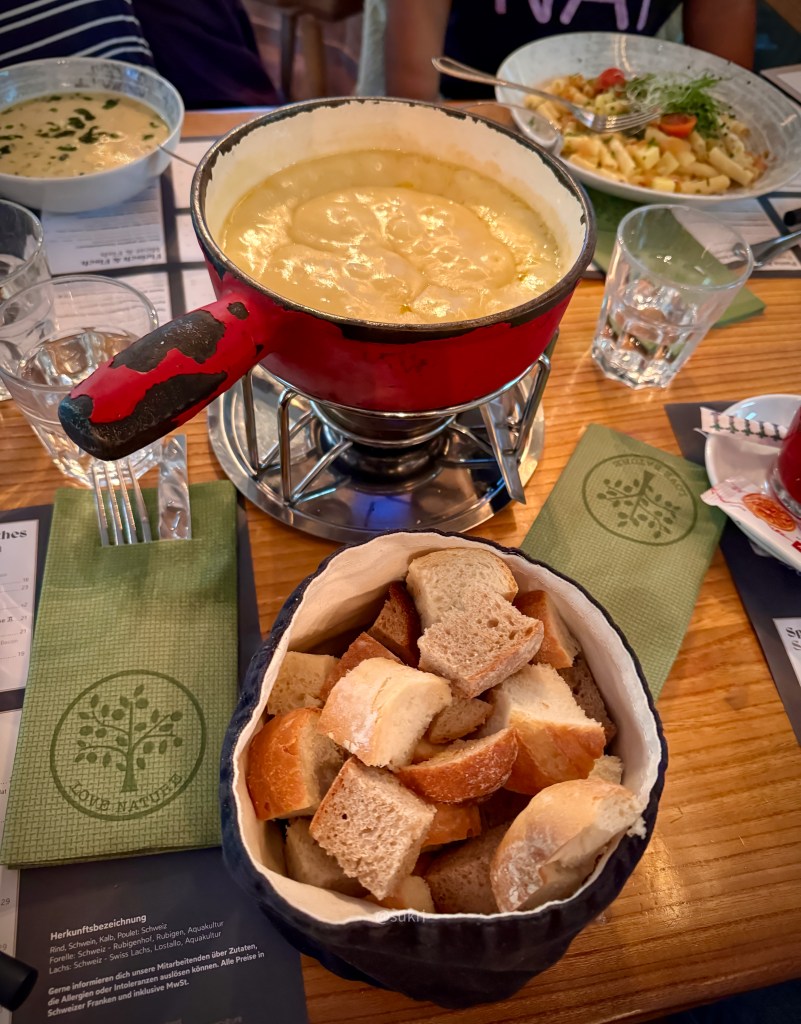
A main in any restaurant in Switzerland is priced between 20 to 30CHF and I’m not even talking about Michelin restaurants. Cheese fondues cost around the same per person. So a meal for a family of four including starters and drinks can easily cost between 120-150CHF or 80-90CHF on a tight budget.
The supermarkets like Coop and Migros stock some excellent options for meals. Fresh meals, great desserts, variety of drinks all at reasonable prices. These are the best options for a cheap meal if you do not have the facilities to make your own. Drinking water fountains are located throughout the country and they taste much better than some bottled water you get in the UK!

If you have an Air BnB and/or have a one-pot cooking device like an InstantPot, you can save a lot more by cooking your own meals. Supermarkets sell a lot of Indian staples due to the high volume of Indian tourists in the country. Microwaves are almost unheard of in Air Bnbs.
Sightseeing and Getting around
If you are on a tight budget, the best advice would be to minimise spending on mountain top excursions. They are priced for tourists. Most locals do not make a trip to Jungfraujoch but a lot of tourists do! If at all you have to make a trip to the top of a mountain, compare options and find the best bang for your buck. Ideally you would choose a destination that offers spectacular views, offers hikes, walks or other things to do for free and has enough to do for at least half a day.

There are innumerable hikes and scenic viewpoints for absolutely free. They require a bit of research and perhaps some fitness for hiking. There are also cheaper alternatives to get a similar view. For example Sunnegga is a cheaper alternative to Gornergrat.
In each of our trips we have spent only on one excursion. The first time it was to First with a hike to Buchalpsee and the second time it was to Gornergrat. We have only paid entrance to Trümmelbach falls on our first trip. The second trip we skipped all places with an entrance fee. We only spent on using public transport to get to some car free villages/towns like between Täsch and Zermatt and Stechelberg and Mürren
We hired a car on both our visits. It worked out cheaper than using public transport. The choice between car or train depends on the cost of rental + insurance + parking for the days you are in Switzerland vs the cost of public transport with possible travel passes for your entire itinerary and number of people that have to purchase a ticket. With children under 16 or just 2 adults traveling, a travel pass could be cheaper than renting a car.
If you have decided on renting a car, it helps to save parking locations on google maps. Most the of the popular towns/cities have a website of their own (it’s mostly <name of the city>.ch) which lists the parking available and the prices. Also remember to drive on the right and be considerate of sheeps or cows that might have strayed onto the road. There are lay-bys to pull over and admire the views as its dangerous to take your eyes off the road!
Switzerland will still be expensive even after you have cut costs to a bare minimum. Hence its vital to research and plan well in advance for the optimal itinerary.
 Fly ✧ Ride ✧ Drive