
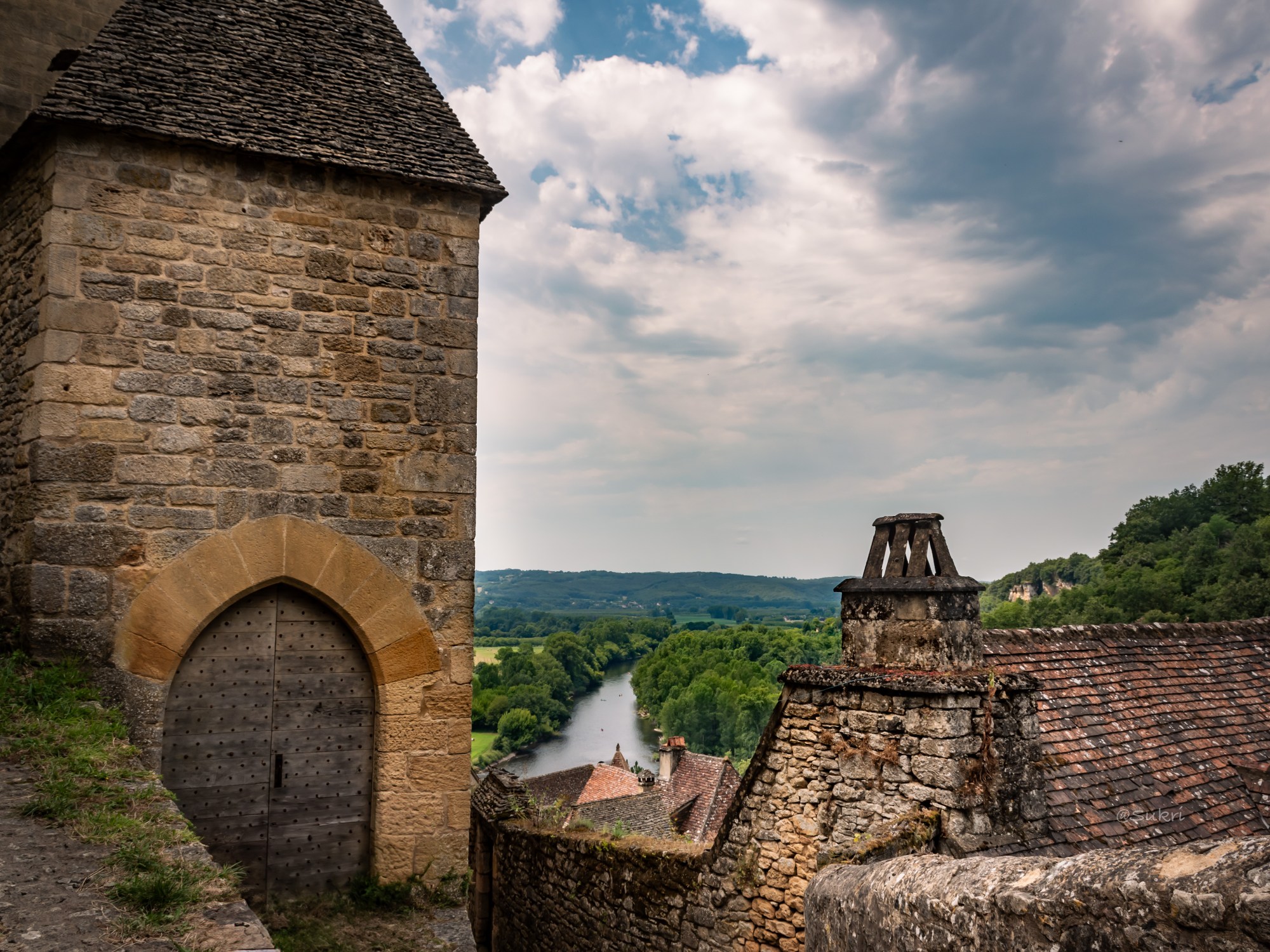
How does it feel to live in the medieval times? Quiet villages without the hum of electricity or motorized vehicles, simple stone houses with smoke rising out of their chimneys, peasants going about their everyday tasks, warlords looking for chances to start, what else but wars, horsemen on their horses parading through narrow streets, the hooves of the horses echoing off the stone paths and a quiet river flowing through all this.
Welcome to the Dordogne Valley where time seems to have stood still. The Dordogne River continues to wind its way around charming medieval villages with their quaint stone houses just like it has been for several centuries. As you walk through a village, you could almost hear the hooves of the horses and expect to meet a horseman just around the corner. The river is so quiet that canoes and paddlers glide down effortlessly gaping at the villages and the castles on either side.

A couple of hours away by car from Bordeaux is the charming region of Périgord with its small villages of century old stone houses and castles on limestone hills, both dotting the countryside on either side of the historical Dordogne river. Nothing much seems to have changed from the time the English and the French were fighting to gain control over the region during the infamous 100 years war.
With our limited time we could only may a day trip to this region from Bordeaux. We rented a car at the Bordeaux airport and made our way down into the quiet region on one of the hottest days of the year! We only had a few hours and with temperatures hovering close to 40, we could only pick a few highlights to experience.
The Dordogne river
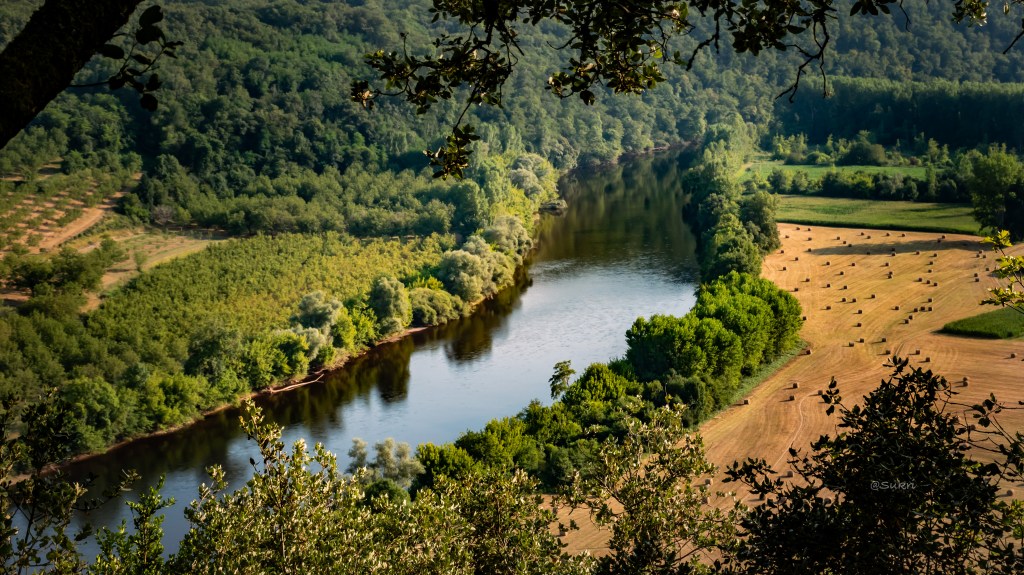
The Dordogne river is the lifeline of the region. It is about 500kms long and is part of the UNESCO’s World Biosphere Reserve. It has been used since the ancient times for transporting goods. In the medieval times this river often marked the borders between the French and the English strongholds during the 100 years war. Castles dot both sides of the river and with their position high up in the hill can be seen by other castles across the river. This actually helped the medieval warlords to keep track of their opponents’ activities at all times.
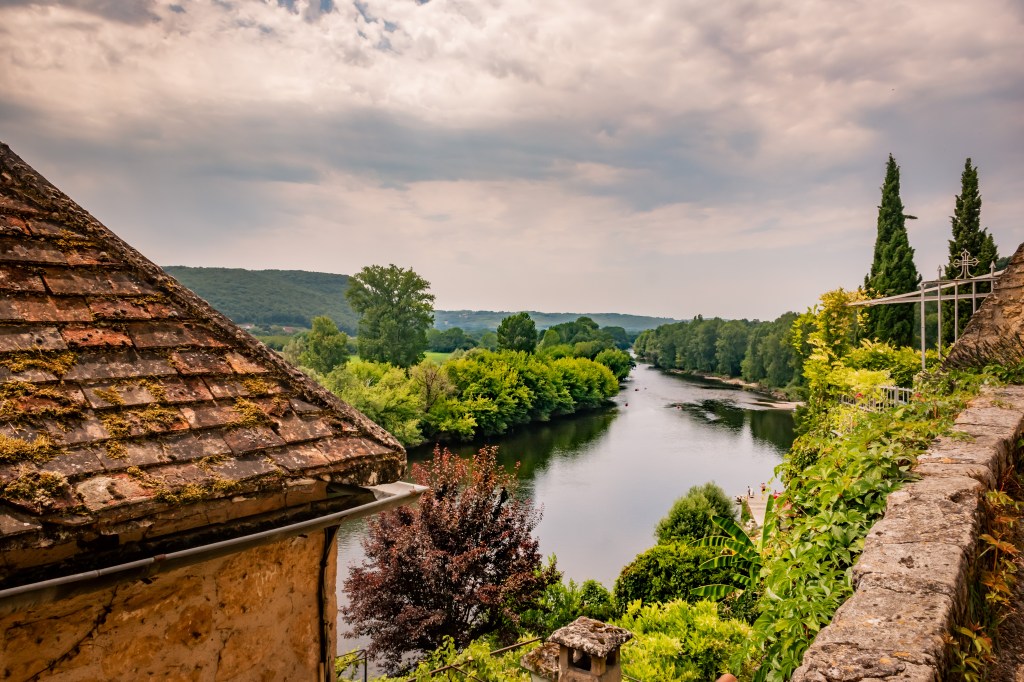
The waters is one of the cleanest waterways in Europe. No sewage is discharged here and the waters are kept clean for swimming. There are supposedly 38 species of fresh water fish with salmon being the most prolific. The European Sturgeon was overfished in the 19th and 20th centuries for their eggs and is now a protected species.
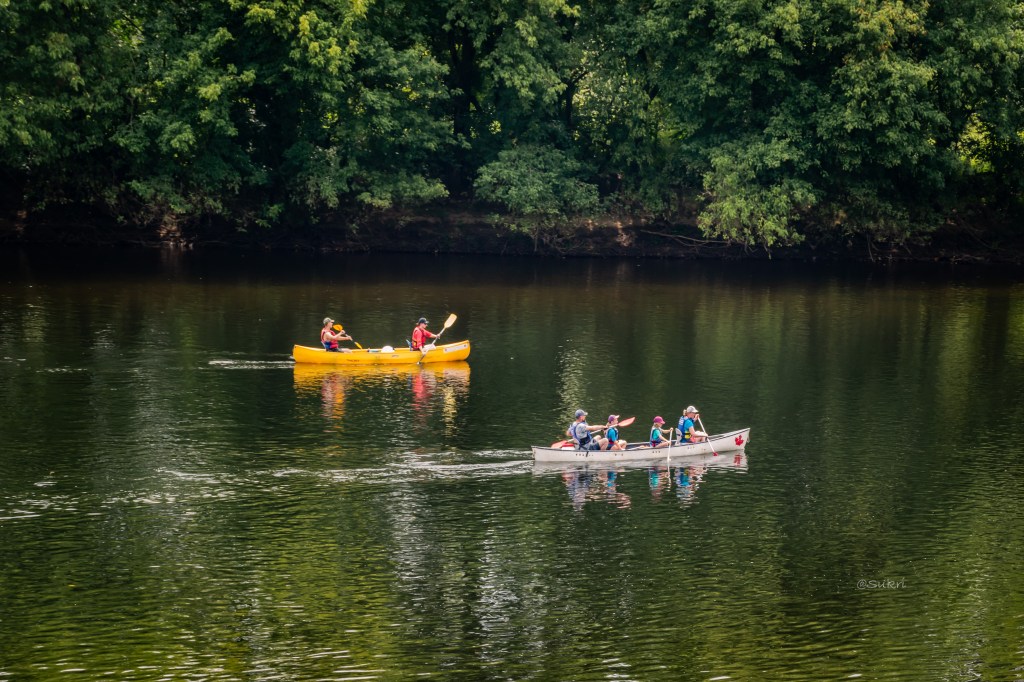
Today, the Dordogne river is extremely popular with kayakers and canoes. The river for most part of the year has very less currents and is quite shallow. With villages and castles of interests on both sides of the river with few bridges to go over them, kayaking is probably the easiest way to see them all in a short period of time. One could also just pull over to sand banks to relax and watch the world go by or take a swim in the refreshing waters. Many companies rent canoes upstream and meet you downstream to transport you and the canoes back to where you left your vehicle. This package makes kayaking even more appealing.
Beynac-et-Cazenac
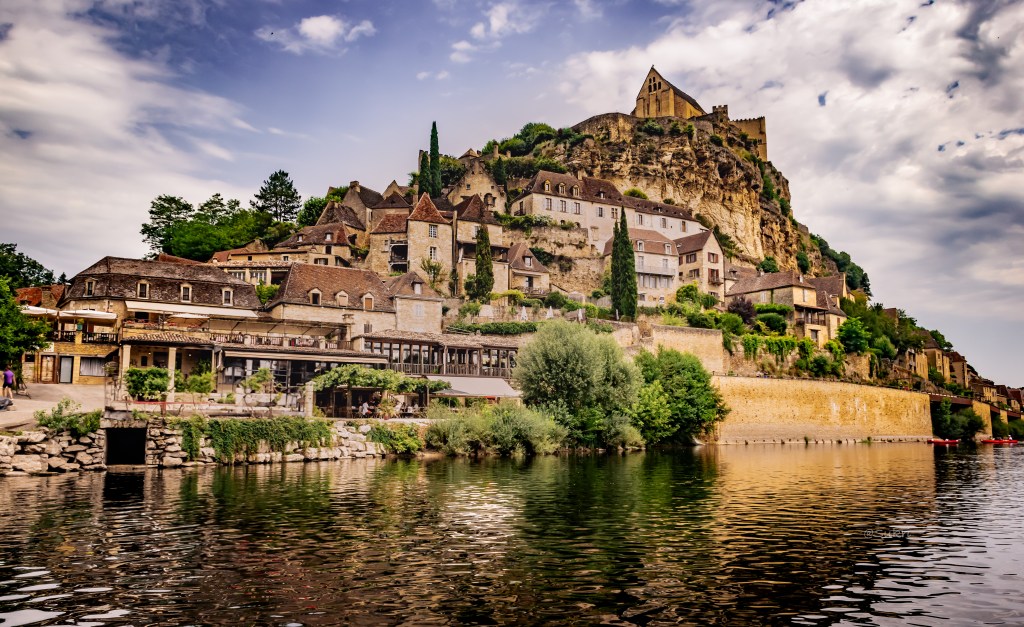
This was our first stop as we arrived around mid day and the car park at the bottom of the village was full. We drove around a couple of times before we spotted an empty bay. We then went on to get tickets for a ride on a barrage style boat on the Dordogne river. Despite the heat there were a lot of canoes and kayakers paddling their way downstream.
Other than the occasional passing vehicles, the village was pretty silent. I was wondering where all the people from the parked cars were. The canoes on the river only caused a splashing sound and the distant chatter of people was all I heard. We purchased our tickets for the 2:30 trip at Gabarres de Beynac and decided to walk around the pretty village.

The mercury was close to 40º C and the village was pretty much deserted. We walked through the pretty ending lanes, some offering glimpses of the Dordogne River with brightly coloured kayaks and canoes gliding past. The stone houses in the village first appeared in the 12th century. There were also viewpoints along the winding lanes to sit down and enjoy the enticing views. We went up as high as the castle and then made our way down to stop for some ice cream. Walnut is a produce of the region and I tried some delicious walnut ice cream.
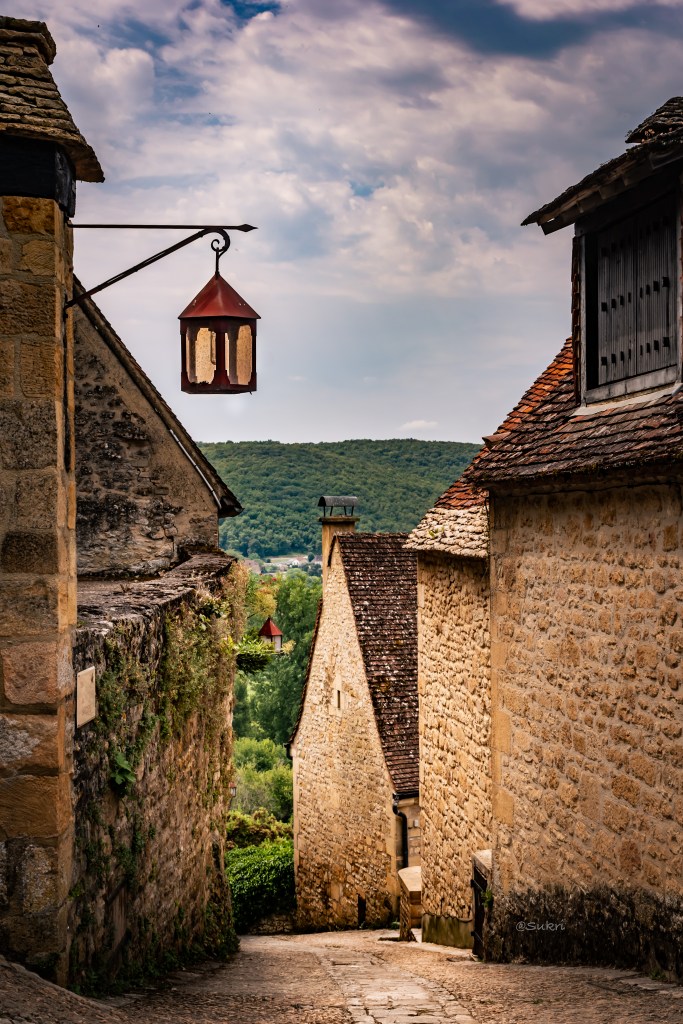
At the bottom of the hill between the ancient village and the river is a modern road that connects all the villages on the northern side of the river. This road was built only in 1860. Until then the road built by the Romans higher up the hill was used for commute.
Gabares de Beynac

It was too hot to stay out and we decided to make our way down to the river for our boat trip. It was nearly half past two and they were boarding the Gabarre. The Gabarre is a kind of boat specific to this region. They have been used for centuries to transport goods and people on the Dordogne River. They were prized possessions and the owners made a lot of money as that was the only way to reach the different villages quickly. Once the railway arrived and built a bridge across the Dordogne these Gabarres soon lost their business and their importance. The railway arrived in 1882 and the last gabarre sailed under it in 1935 ending the 2000 year golden era of commerce on the river. Today the gabarres are used for tourists to take a relaxed tour on the river.
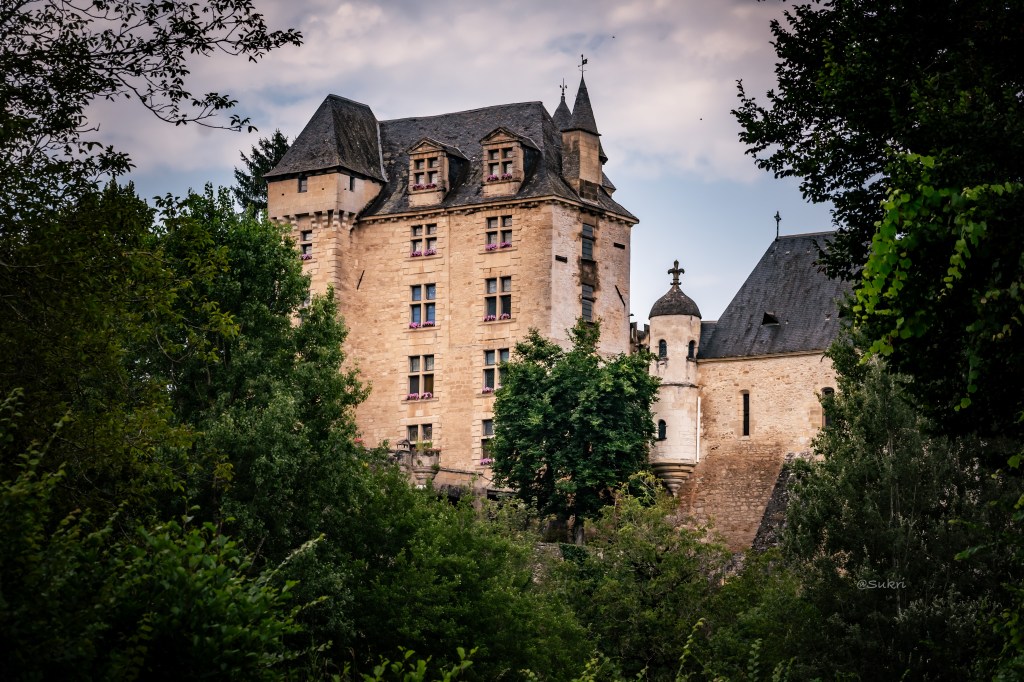
The tour was guided and we had a lovely guide whose main commentary was in French but offered pretty insights into the history of the region in English specially for us. There was also material that spoke about the different castles in the region. We went as far as Castelnaud before making our way back. We stopped to see the privately owned castle of Fayrac, the castle at Castelnaud and also got a glimpse at the gardens of Marqueyssac, which we were planning to visit later in the afternoon.
It was late afternoon and we were very hungry. We decided to drive to a secret beach on the river and have a picnic. I had packed baguette, cheese, tomatoes that u purchased in Bordeaux.
Plage de Pendoilles
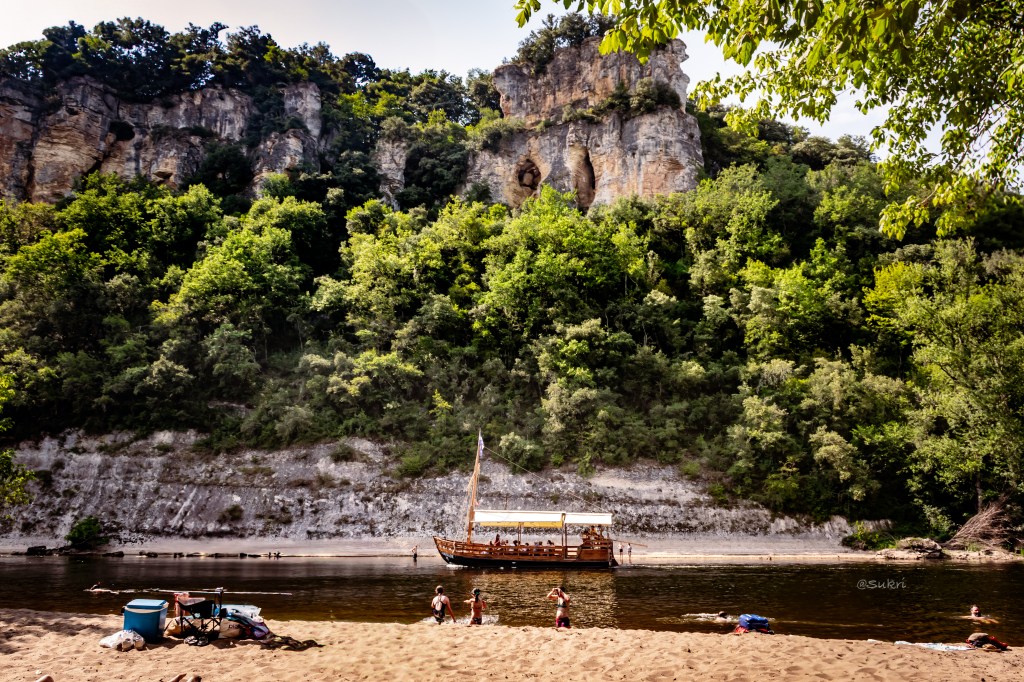
The secret beach! When I searched for beaches along the Dordogne river no search returned this beach. I spotted this lovely beach with a huge car park only when I went on the street view on Google maps. Located just after La Roque, the beach is actually hidden from view even after approaching the carpark. There is a short walk through weds before it opens to a lovely sand beach. We brought our picnic, found a nice shady spot and had a quick lunch while a lot of people were cooling off in the Dordogne river. We unfortunately did not carry any swim wear and went down into the water only until knee level. This part of the river was very shallow and we saw people walking across to the other bank of the river. The river waters were refreshingly cool and we spent considerable time to cool off in the afternoon heat. Wish we had brought swim wear as the sun the would have dried us off in a few minutes!
If we had more time we would have drove further east to see more of the region. But with just a day in our hands we had to start our return to Bordeaux with one last stop
La Roque Gageac

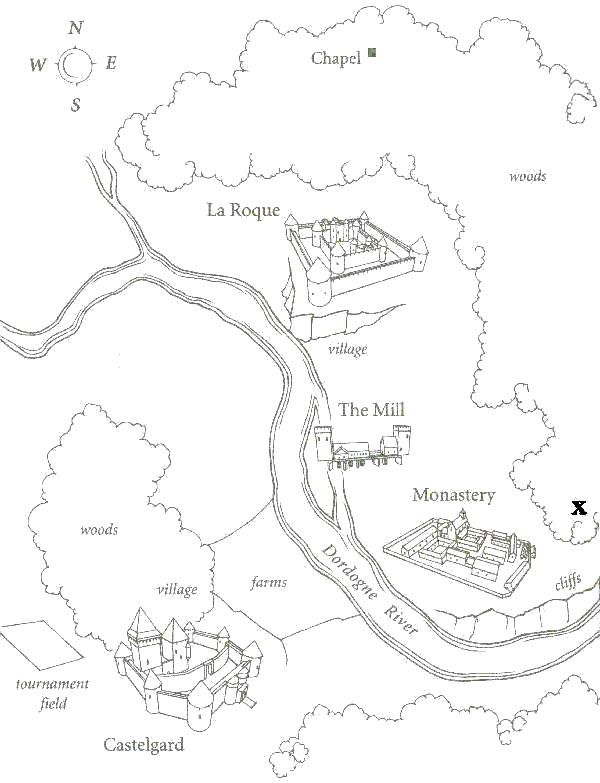
We unfortunately could not stop here as we had very little time but this was the village that got me started on planning a trip to the Dordogne river valley. The name of the town was from Michael Crichton’s book, Timeline. A story about time travel where archaeology students excavating a site near La Roque find out how people actually lived in the medieval times. The story was set in an imaginary village called Castelgard but also drew references to real villages and towns like La Roque and Sarlat. The story’s setting was not very different from what I witnessed. The pretty villages continue to remain how they were in their ancient times.
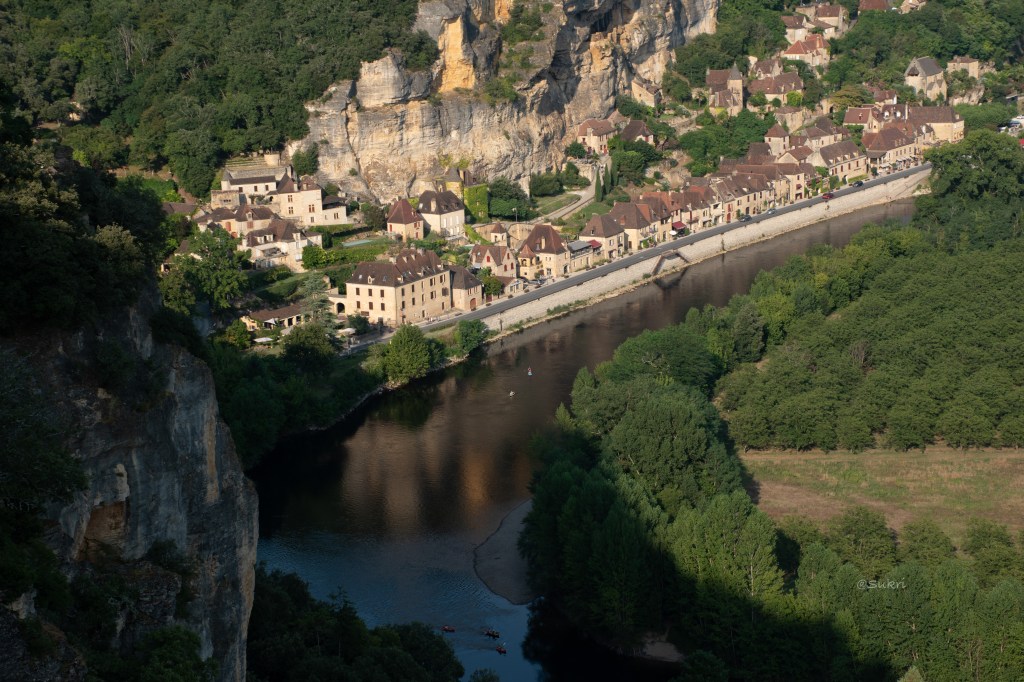
As we drove past La Roque we marvelled at the honey coloured buildings along the main road and rising up to the cliff and almost camouflaging in the limestone of the exposed cliff. Due to the limited time we couldn’t afford a stop in this lovely village.
Jardins de Marqueyssac
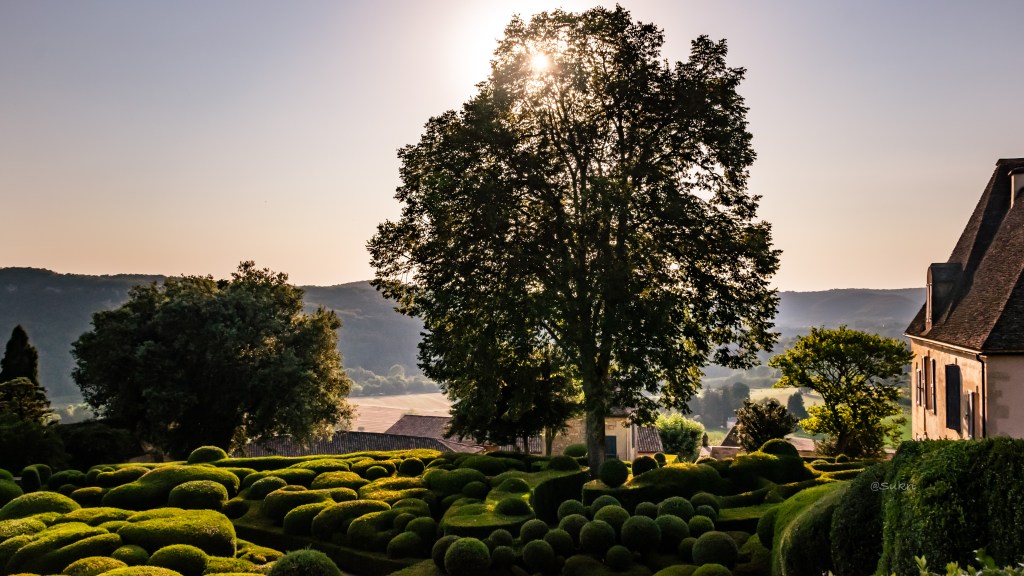
Situated up on a cliff, the gardens of Marqueyssac with its lovely Chateau and cafe faces both the castle of Beynac and the castle of Castelnaud. The beautiful manicured gardens with its shaped boxwoods has enchanting views over the Dordogne valley. If there’s one place when you want to see the entire area its from here. The entrance ticket is reasonably priced and it’s easy to spend 2-3 hours enjoying the gardens and the views over the valley.

The original site dates from 1692 but it was only in the late 19th century that it was developed as a garden with trimmed boxwoods and over 15,000 trees including cypress, linden, stone pine and cyclamen from Italy. The 900m walk to the belvedere from the trimmed boxwoods is through lovely gardens and a small waterfall. The belvedere is located at probably the highest point in the garden is high up the hill.

We visited the gardens at about 5 pm in the afternoon when the sun was casting its golden rays. Despite cooling off in the Dordogne river just a few minutes ago we were hot and sweaty so we headed straight to the cafe for a drink and a pastry. We caught the garden’s famous peacocks as they rested near the cafe, looking out to the valley.


The castle and village of Beynac was visible from the cafe and the castle of Castelnaud was visible from the boxwoods pavilion. After a few pictures of these two highlights we headed over to the Belvedere to catch a view of La Roque Gageac and the dark dordogne river snaking its way through the valley. There were still a few kayakers still paddling on the river and the pretty village of La Roque and the cliff above were gleaming bright in the golden rays of the sun. We were completely drained at this point but was glad that our day ended with this beautiful view over the Dordogne valley and of all the great castles in the area.
The valley is usually not done as a day trip from Bordeaux but I guess we pioneered it! It is a long drive and takes about 2.5 hours one way. Thanks to SC agreeing to drive we could visit this wonderful region and get a feel of life in the medieval times.
 Fly ✧ Ride ✧ Drive